Compel Groupgroup

Car Battery Testers and Analysers

Author: James Whitfield, Equipment Desk5 min read
Updated

A battery tester answers two different questions and it is worth knowing which one you are asking. State of charge is how full the battery is right now. State of health is how much of its original capacity it still has. A battery can be fully charged and still fail, which is why a voltmeter alone is not a battery test.

12 products from £125.99 to £241.99

Specs and prices

Specifications as declared by the seller of each listing, not our own measurements. Prices update with the catalogue.

ProductPriceProduct TypeVoltage RangeTest FunctionsDisplay TypeConnectivity
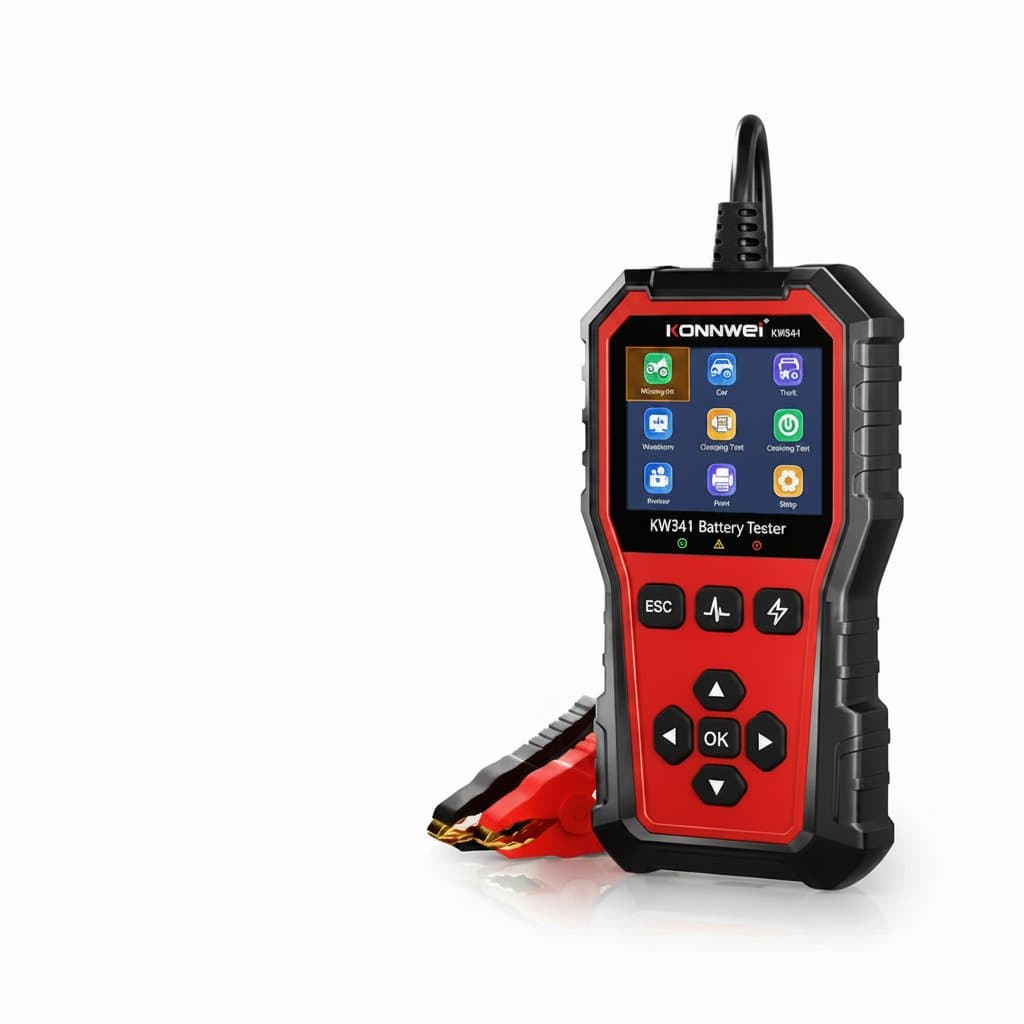
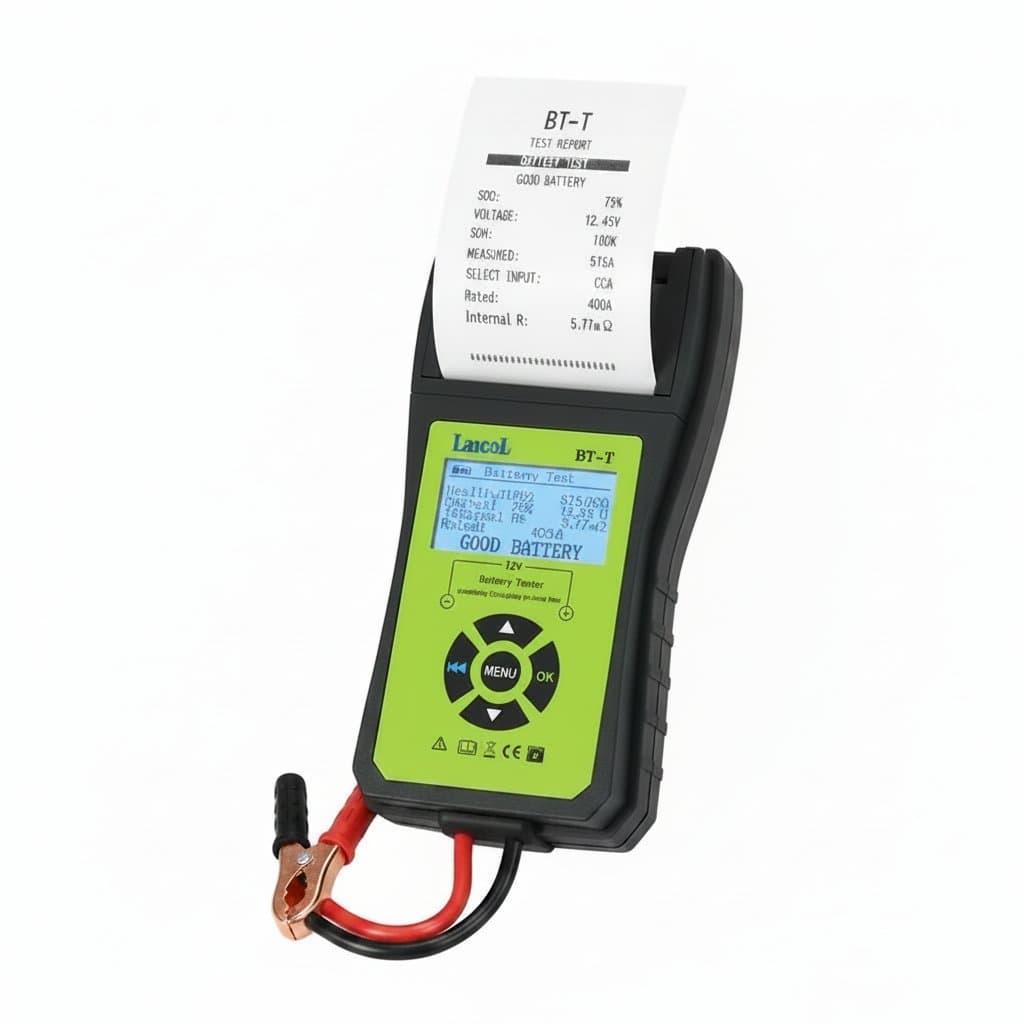
12V battery tester with a built-in printer for automotive diagnostic results.12V Battery Tester with Printer£241.99Battery Tester--Digital-
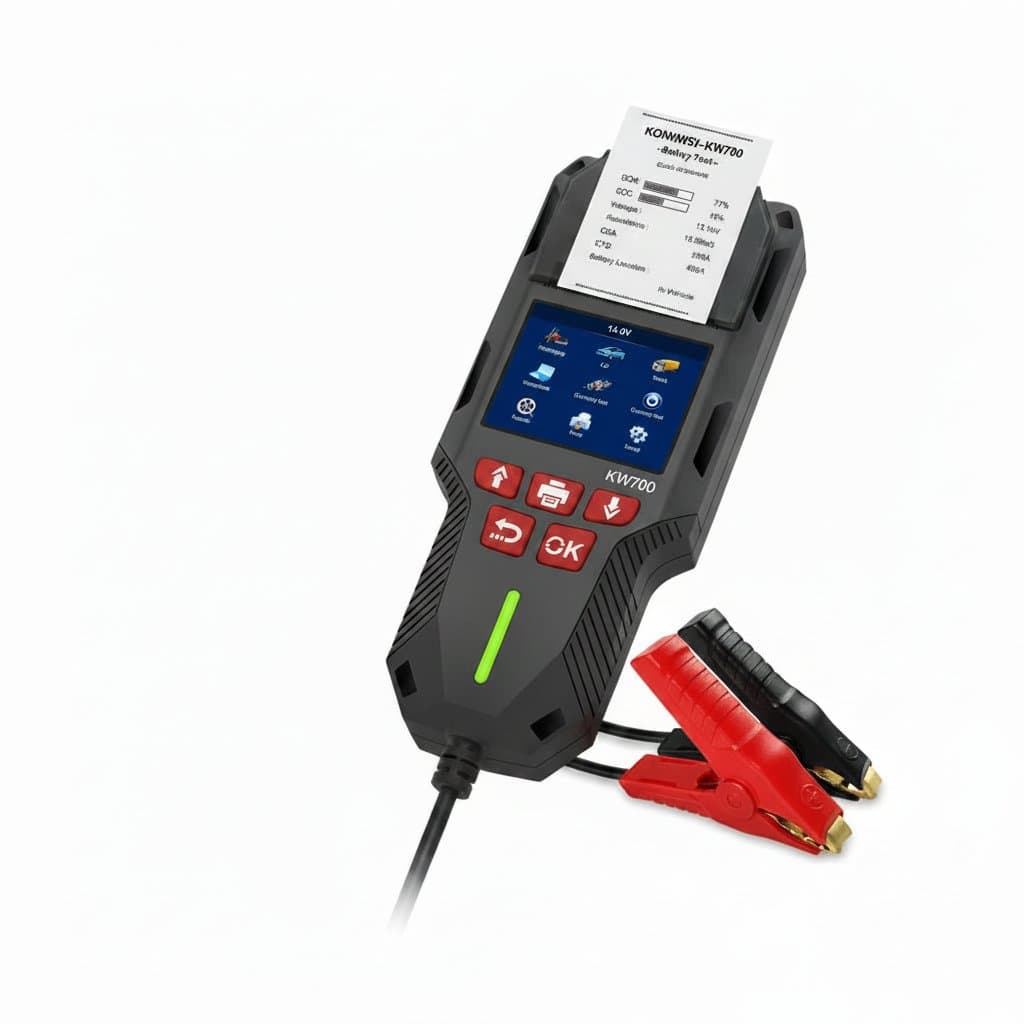
Battery tester with printer, analysing cranking and charging systems.12V/24V Battery Tester with Printer£221.99Battery Tester with Printer--Digital-
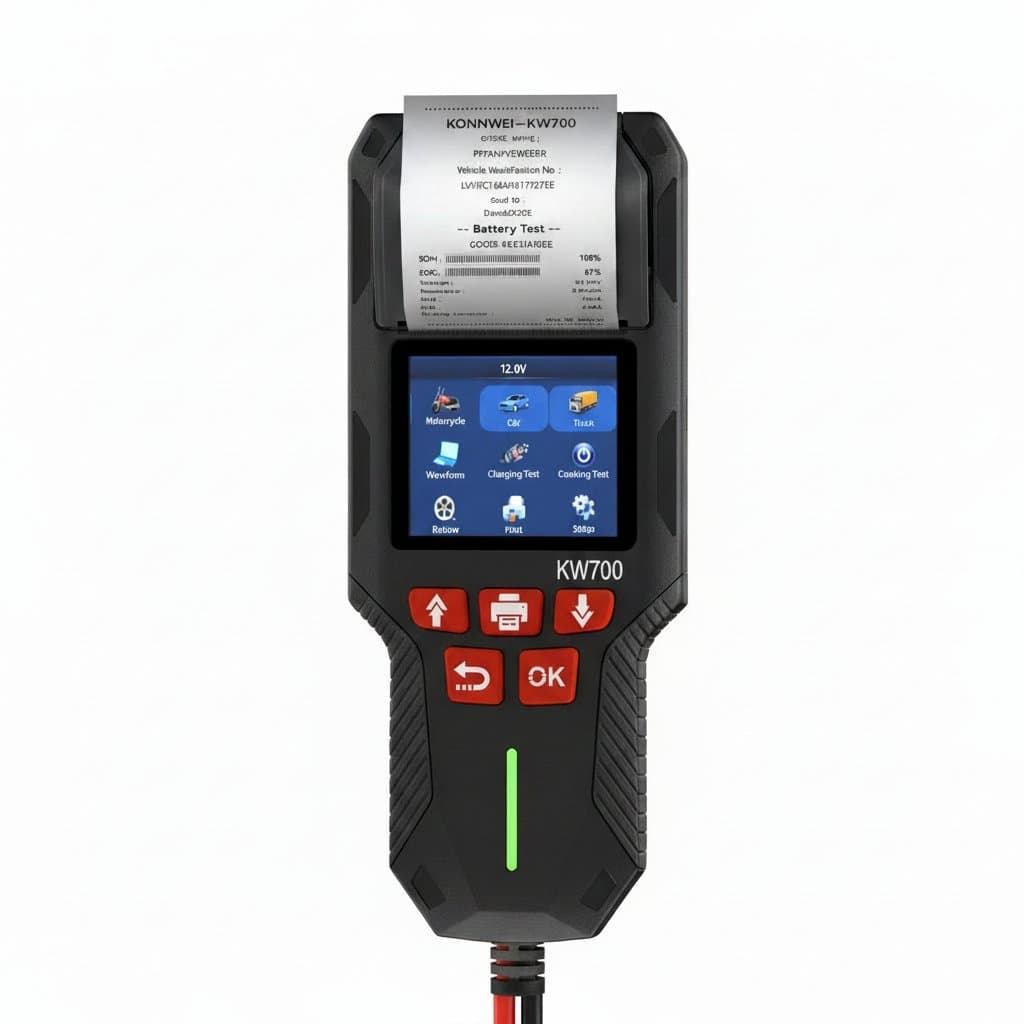
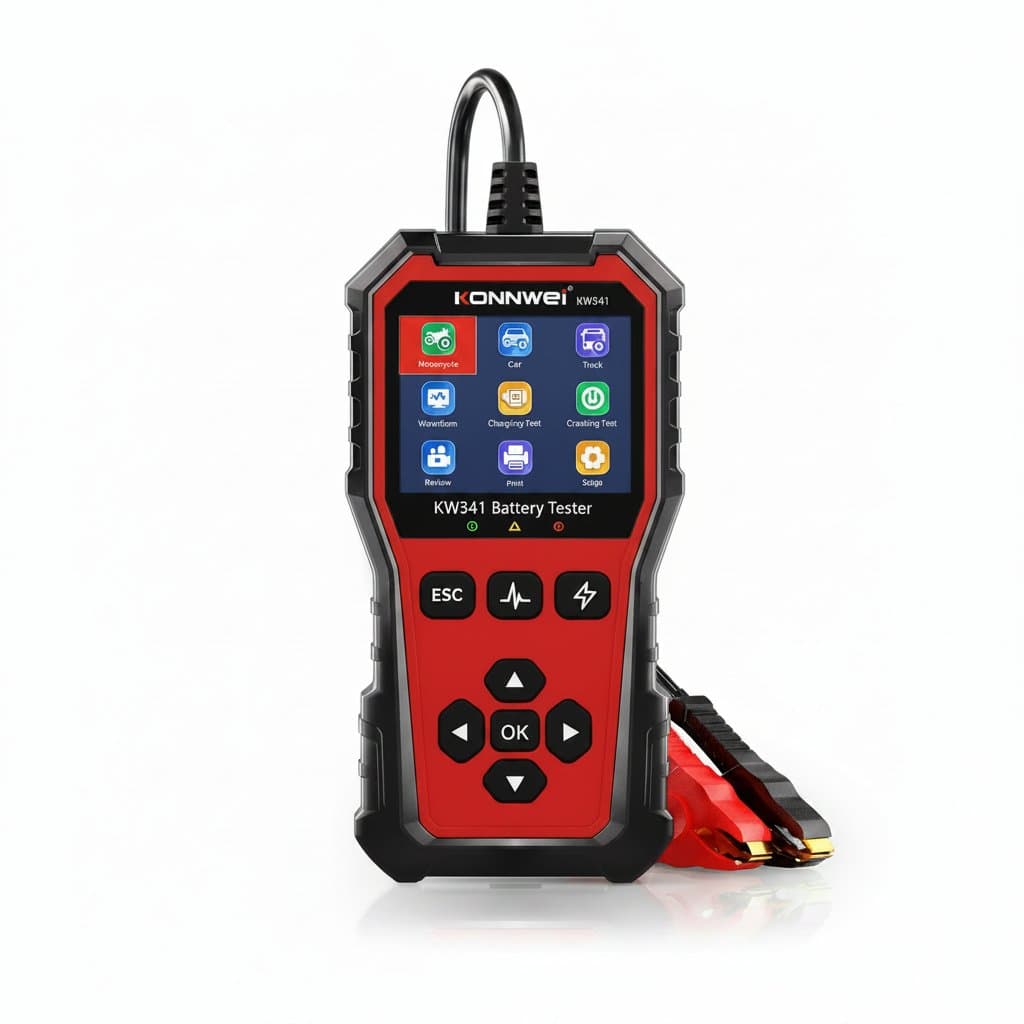
Car battery tester analysing a 12V/24V battery.Car Battery Tester£204.99Battery Tester12V/24V-Digital-
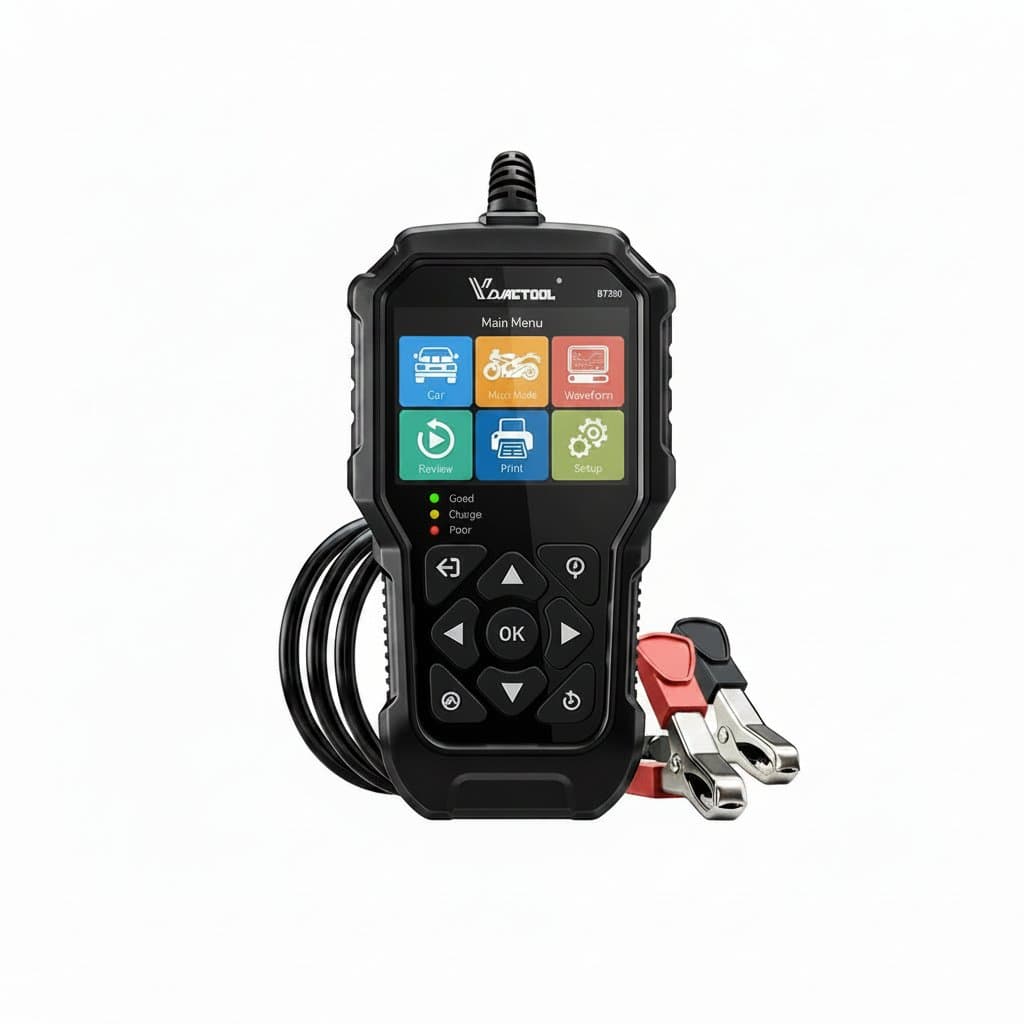
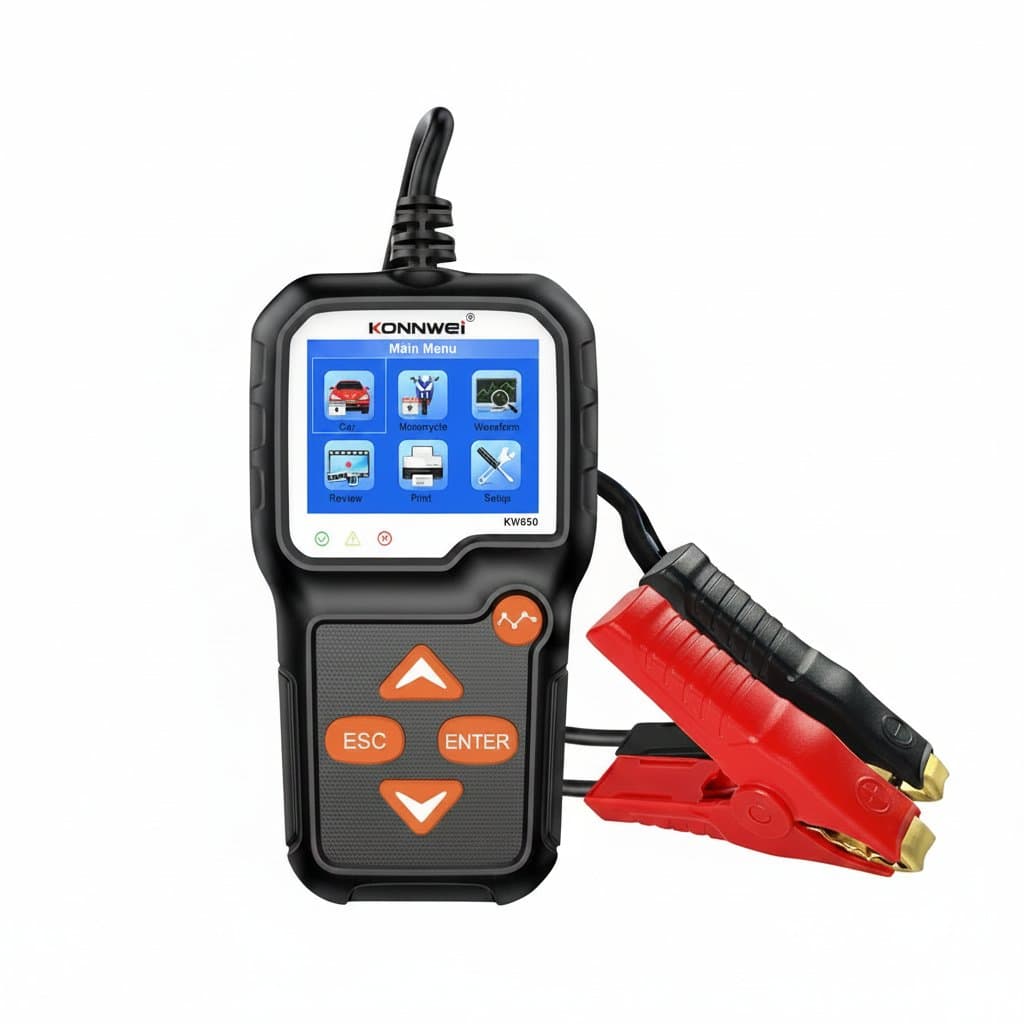
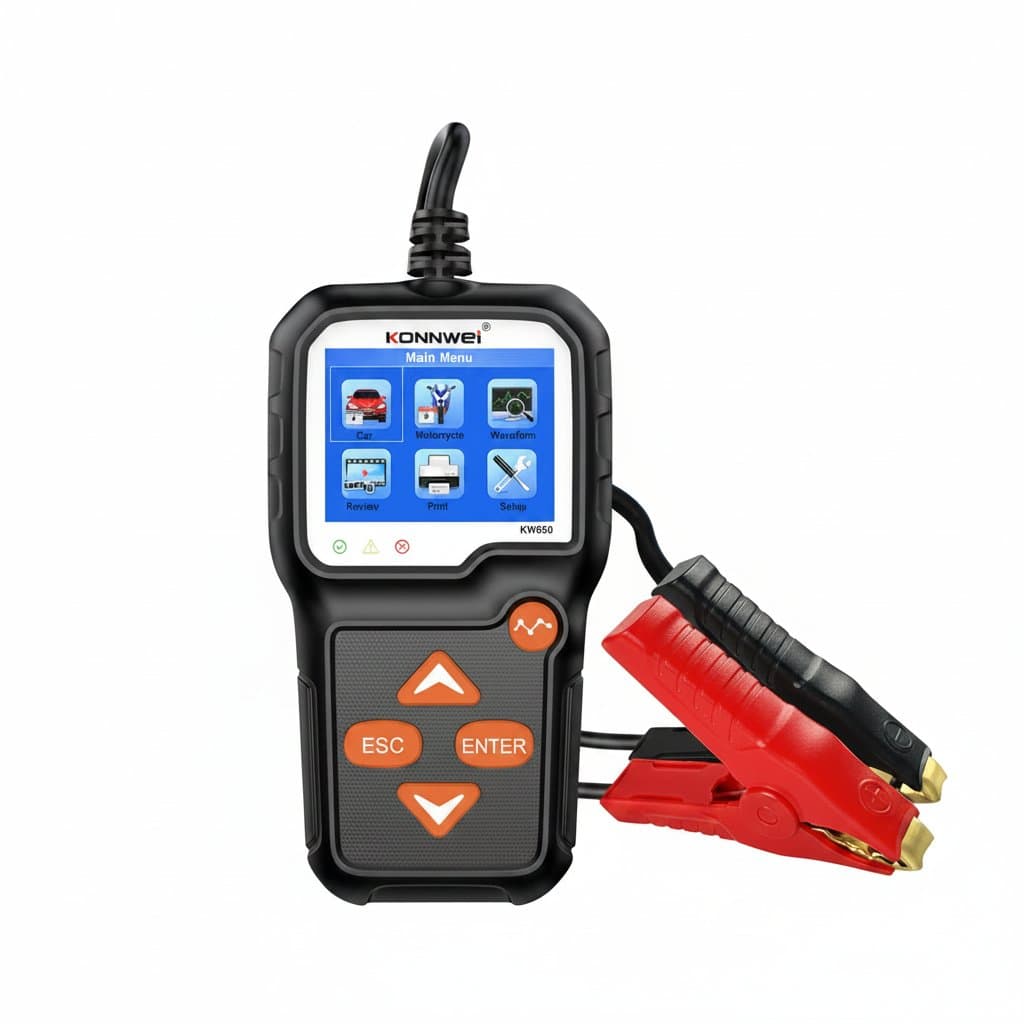
Car and motorcycle battery tester, a 6V/12V battery analyser.Car & Motorcycle Battery Tester£177.99Battery Tester-Battery, Cranking, ChargingDigitalBattery Clamps
Car battery tester for 12V/24V cranking and charging system diagnostics.Car Battery Tester£171.99Car Battery Tester12V/24V-Digital-
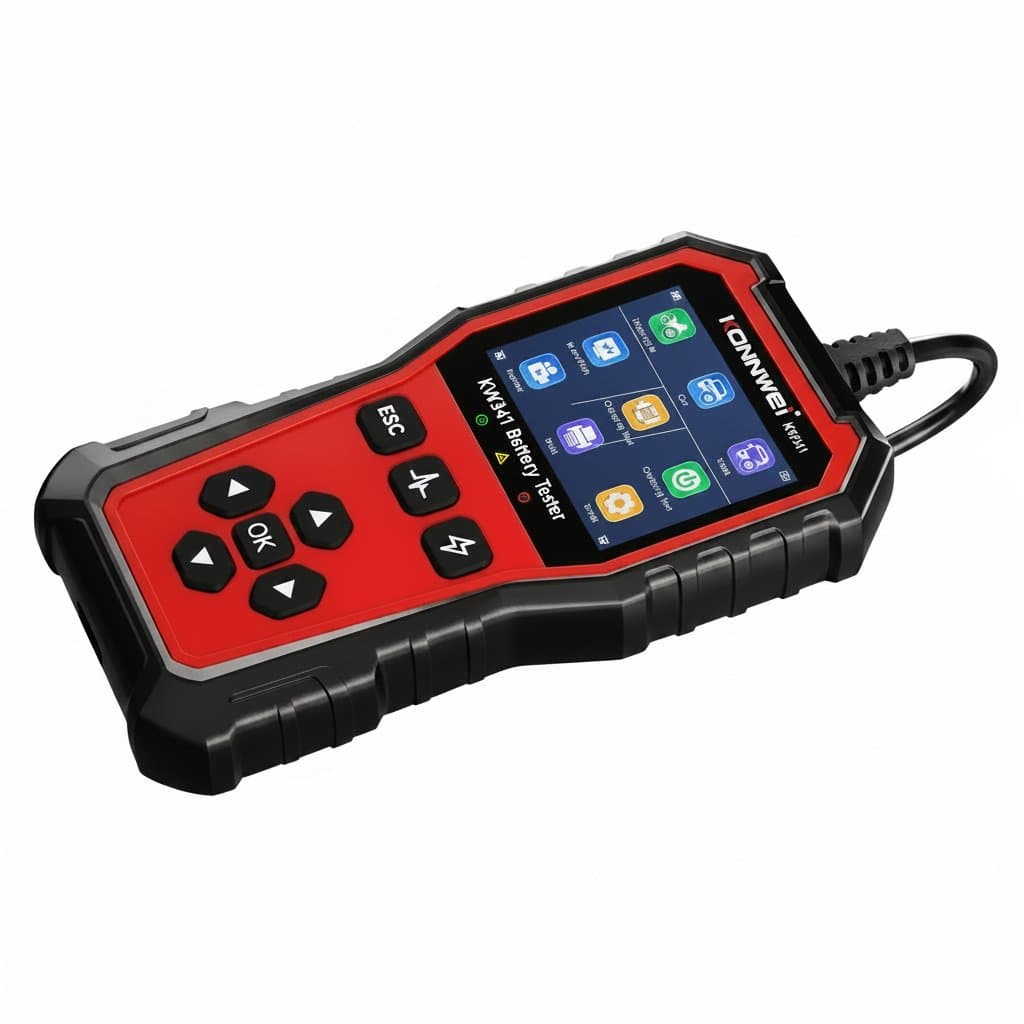
Battery tester for 6V, 12V, and 24V vehicle systems.Battery Tester£154.99Battery Tester-Start Voltage, Charging System ScanDigital-
Car and motorcycle battery tester analysing 6V/12V batteries.Car & Motorcycle Battery Tester£150.99Battery Tester-Battery, Cranking, ChargingDigital-
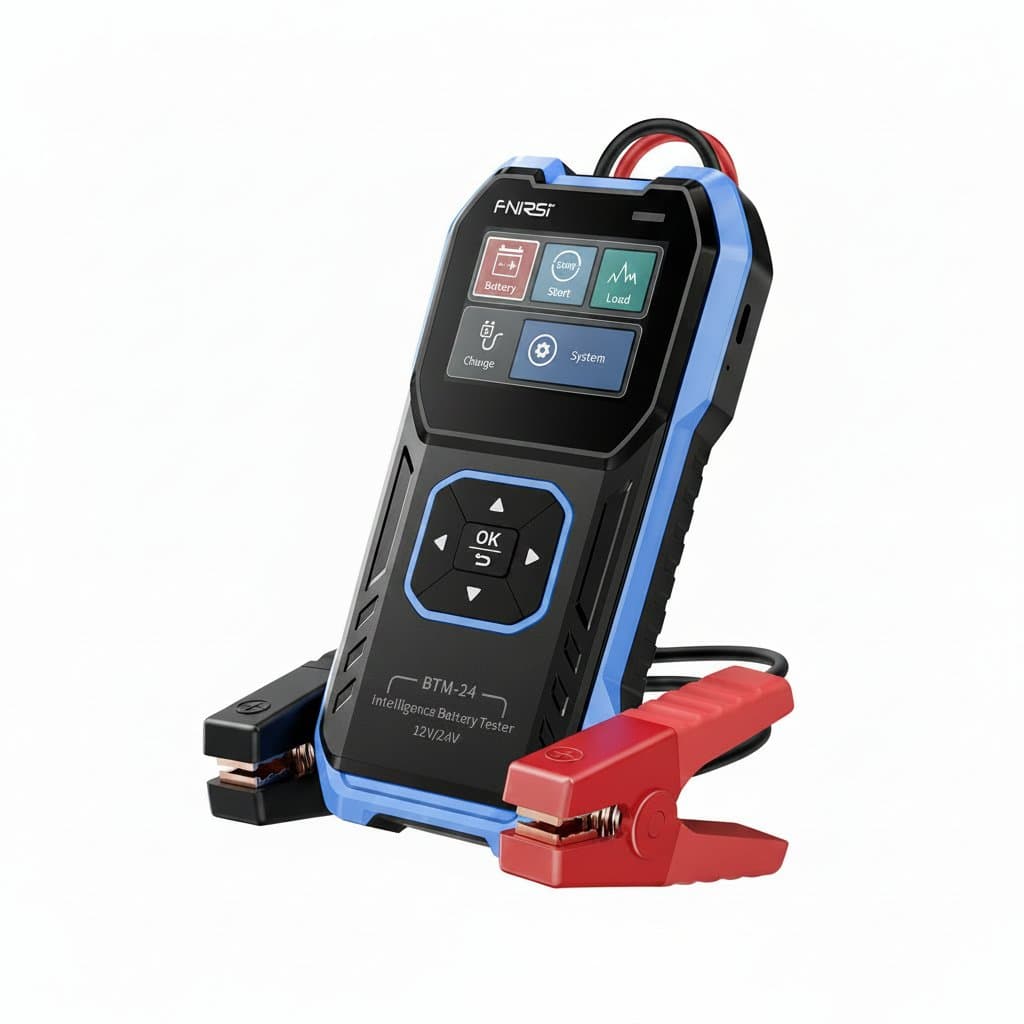
The ANCEL BM300 Pro Bluetooth car battery tester for 6V, 12V, and 24V batteries, monitoring SOH and SOC.Car Battery Tester£142.99----Bluetooth

State of charge and state of health are not the same

Resting voltage tells you the state of charge. Around 12.6 volts is a fully charged lead acid battery, roughly 12.4 is about three quarters, and below about 12.0 it is substantially flat. That is useful and it says nothing about whether the battery can still deliver current.

State of health is about capacity and internal resistance. As a battery ages, plates sulphate and internal resistance rises, so it can sit at a healthy 12.6 volts at rest and collapse the moment the starter turns. This is why a car that reads fine on a voltmeter still fails to start on a cold morning.

A proper tester measures both, and the health figure is the one that predicts failure. Testing a battery that has just been driven, or one that is flat, gives a health reading that is wrong in both directions, so charge it and let it settle before drawing conclusions.

What each reading tells you
ReadingMeansDoes not tell you
Resting voltageHow charged it is nowWhether it can crank the engine
Measured CCA against ratedHow much capability remainsWhether it is charged
Cranking voltageHow far it drops under real loadThe cause of a slow crank
Charging system testWhether the alternator is holding voltageBattery condition

CCA, and why you must enter the right number

Cold cranking amps is the current a battery can deliver at a low temperature for a set time while holding a minimum voltage. A tester works by measuring the battery and comparing what it can now deliver against the rating you tell it the battery was sold with.

That comparison is the whole test, so the number you enter decides the result. Enter a rating far above the true one and a healthy battery is condemned; enter one far below and a failing battery passes. The rating is printed on the battery label, and it is worth taking a moment to read it rather than accepting the tester default.

The rating standard matters too. CCA, EN, DIN, IEC and SAE are measured differently and give different numbers for the same battery, so a tester set to the wrong standard is comparing against the wrong scale. Most testers ask; set it to whatever the label states.

Surface charge, and testing at the right moment

A battery that has just been charged or driven carries a surface charge, an elevated voltage sitting on the plates that has not settled into the chemistry. It reads high and flatters every measurement taken from it.

Removing it is simple: switch on the headlights for about thirty seconds, or leave the vehicle standing for a few hours. Then take the reading. Skipping this step is the most common reason a test says a battery is fine and it fails a week later.

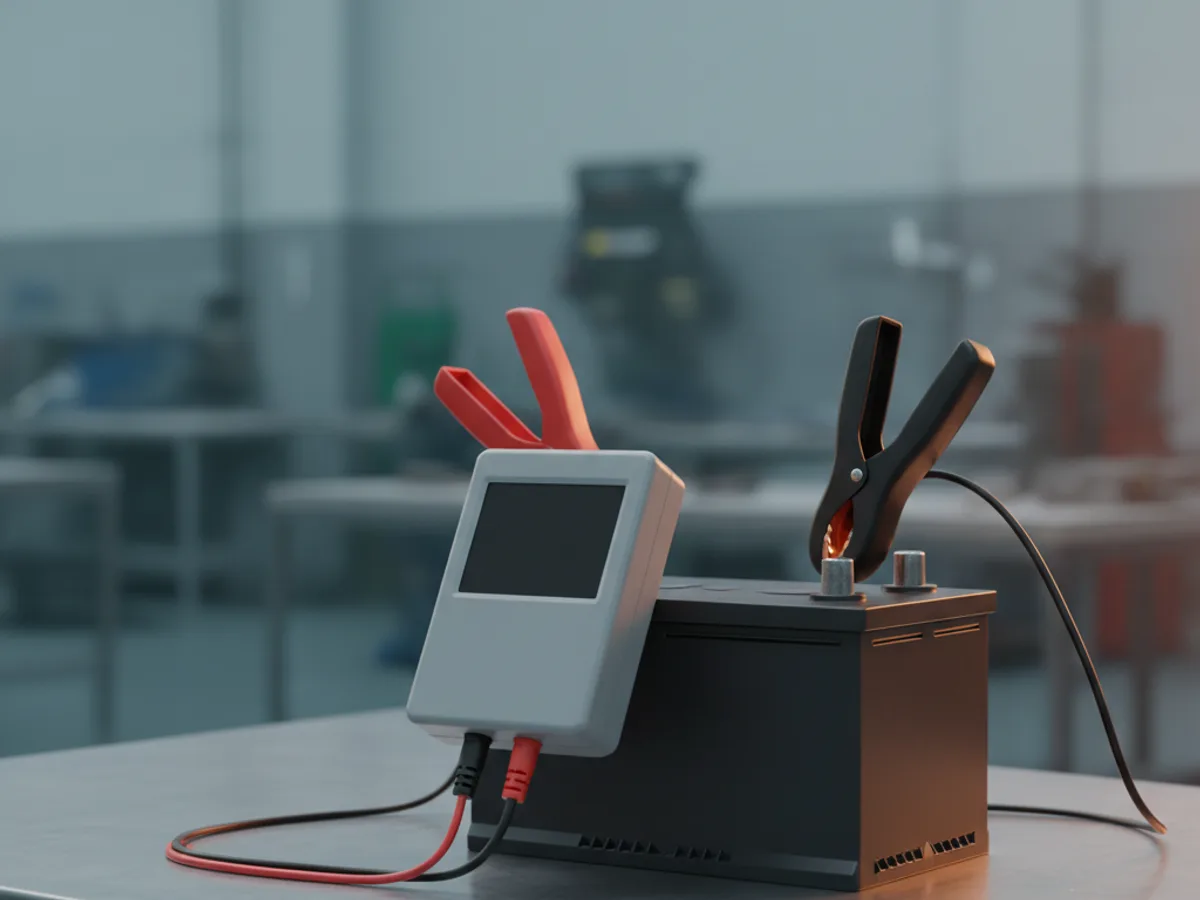
Test at the battery posts rather than at a clamp where possible, because a corroded or loose clamp adds resistance that the tester reads as battery condition. If a reading looks poor, clean the terminals and repeat before condemning the battery, since terminal corrosion imitates a failing battery closely.

Battery type, and testing the charging system too

Modern vehicles use several lead acid variants and they do not behave alike. A conventional flooded battery, an EFB and an AGM all have different internal resistance and different voltage characteristics, so a tester that offers a battery type setting needs it set correctly or the health figure is measured against the wrong expectation.

The other half of the job is the charging system. Most of these testers will measure charging voltage at idle and under load, and check for ripple from a failing diode in the alternator rectifier. A battery that keeps going flat is often a charging fault rather than a bad battery, and testing only the battery finds the symptom.

A carbon pile load tester is the older approach: it draws a genuine heavy current and watches the voltage sag. It is unambiguous and it stresses a marginal battery, which is why some workshops keep one. Conductance testers are quicker, safer and work on a battery that is not fully charged, which is why they have largely replaced them.

James Whitfield, Equipment Desk editor at Compel GroupJames WhitfieldEquipment Desk

James edits the machine and equipment buying guides. The specifications on these pages are the declared figures from the live listings we hold, with a note wherever a number comes from a published standard instead. Pages are re-checked as the catalogue changes.

Share
Add Compel Group as a preferred source on Google

Car battery testers and analysers

12V battery tester with a built-in printer for automotive diagnostic results.

Maintenance & Parts

12V Battery Tester with Printer | Automotive Diagnostic Tool | Fast Print Test Results

CMP-01402MAIN-00253
£241.99
Battery tester with printer, analysing cranking and charging systems.

Testing Equipment

12V/24V Battery Tester with Printer | Cranking & Charging System Analyzer | 10-2000 CCA

CMP-01424TEST-00163
£221.99
Car battery tester analysing a 12V/24V battery.

Testing Equipment

Car Battery Tester | 12V/24V Battery Analyzer | 10-2000 CCA Test & Print

CMP-01417TEST-00162
£204.99
Car and motorcycle battery tester, a 6V/12V battery analyser.

Maintenance & Parts

Car & Motorcycle Battery Tester | 6V/12V Battery Analyzer | 100-2000 CCA Cranking & Charging Tool

CMP-01426MAIN-00267
£177.99
Car battery tester for 12V/24V cranking and charging system diagnostics.

Maintenance & Parts

Car Battery Tester | 12V/24V Cranking & Charging System Diagnostic | 0-2000 CCA Automotive Load Tester

CMP-01413MAIN-00259
£171.99
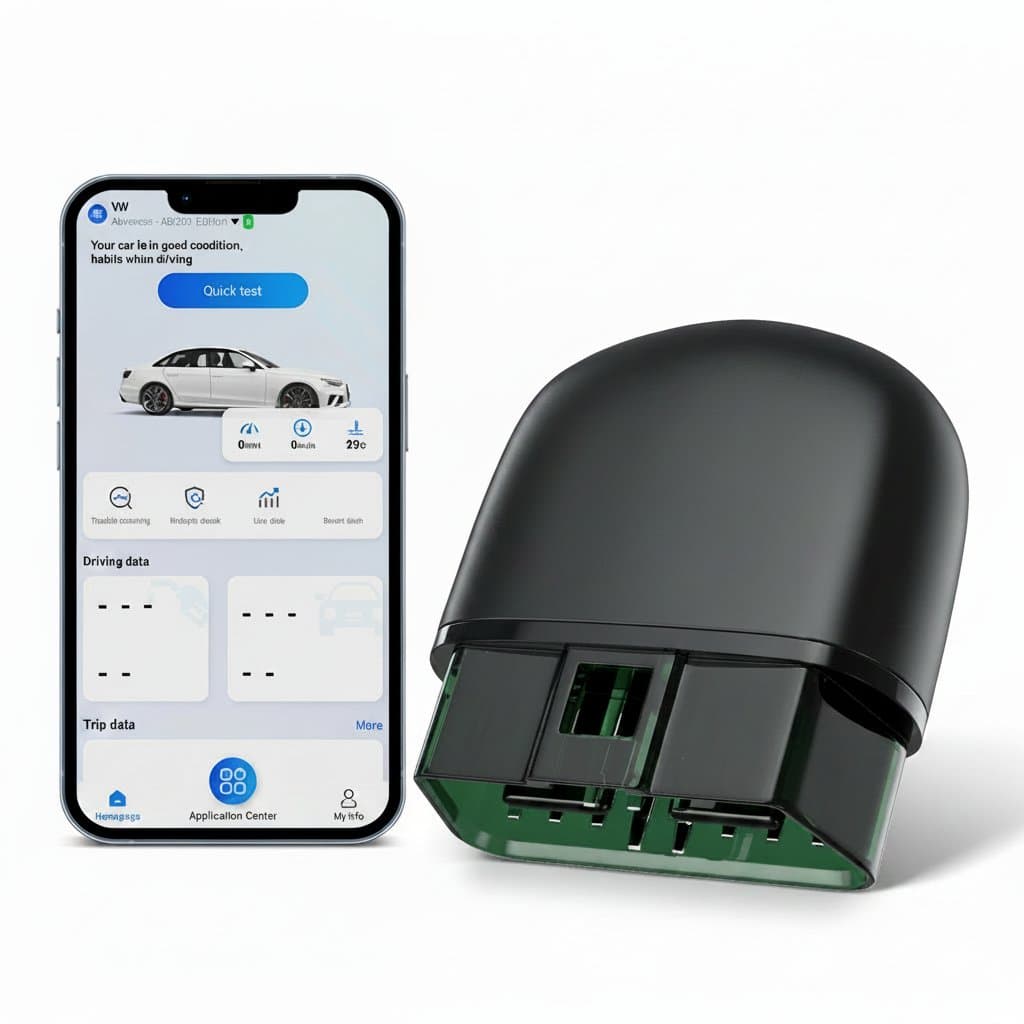
The XTOOL Advancer AD20PRO OBD2 Bluetooth Scanner, a full-system diagnostic tool and car battery tester, shown in hand for scale.

Car Battery Testers

Battery Tester & OBD2 Scanner | Bluetooth Full System Diagnostic Tool

CMP-02099CARB-00002
£165.99
Battery tester for 6V, 12V, and 24V vehicle systems.

Testing Equipment

Battery Tester | 6V 12V 24V Vehicles | Start Voltage & Charging Scan Tool

CMP-01433TEST-00166
£154.99
Car and motorcycle battery tester analysing 6V/12V batteries.

Maintenance & Parts

Car & Motorcycle Battery Tester | 6V/12V Battery Analyzer | 100-2000 CCA Cranking & Charging Tool

CMP-01440MAIN-00276
£150.99
Car battery tester and fault code reader for 6V, 12V, and 24V batteries.

Maintenance & Parts

Car Battery Tester | 6V 12V 24V Battery Analyzer | Fault Code Reader

CMP-01418MAIN-00262
£146.99
The ANCEL BM300 Pro Bluetooth car battery tester for 6V, 12V, and 24V batteries, monitoring SOH and SOC.

Car Battery Testers

Car Battery Tester | 6V 12V 24V Monitor | SOH & SOC Health Test

CMP-02121CARB-00008
£142.99
Car battery tester for 6V/12V systems, detecting a 5-3000 CCA range.

Maintenance & Parts

Car Battery Tester | 6V/12V System Detect | 5-3000 CCA Range

CMP-01405MAIN-00254
£137.99
Car battery tester diagnosing 6V, 12V, and 24V battery faults.

Testing Equipment

Car Battery Tester | 6V 12V 24V Battery Fault Diagnosis | Charging System Scan Tool

CMP-01432TEST-00165
£125.99

See the full range

Buying guide

Car Battery Testers and Analysers questions

Is voltage enough to test a battery?
No. Resting voltage shows state of charge only. A battery can read a healthy 12.6 volts and still collapse under the starter, because internal resistance has risen with age. You need a health or CCA measurement for that.
Why does the tester ask for a CCA rating?
It compares what the battery can now deliver against what it was sold as capable of. Enter the wrong figure and the verdict is wrong, so read the rating printed on the battery label rather than using the default.
What is surface charge and why does it matter?
An elevated voltage sitting on the plates after charging or driving that has not settled. It flatters every reading. Remove it by switching on the headlights for about thirty seconds, or leave the vehicle standing.
Does the battery type setting matter?
Yes. Flooded, EFB and AGM batteries have different internal resistance and voltage behaviour, so a health figure measured against the wrong type is compared to the wrong expectation.
My battery keeps going flat but tests fine. Why?
Often a charging fault or a parasitic drain rather than the battery. Most testers will also check charging voltage at idle and under load and look for alternator ripple, which is where to look next.
Should I test at the clamps or the posts?
At the posts where you can. A corroded or loose clamp adds resistance the tester reads as battery condition, so clean the terminals and retest before condemning a battery on a poor reading.

We use cookies. Some keep the store working, others show us what to fix. No third-party trackers, and we never sell your data. Learn more about cookies and your privacy