
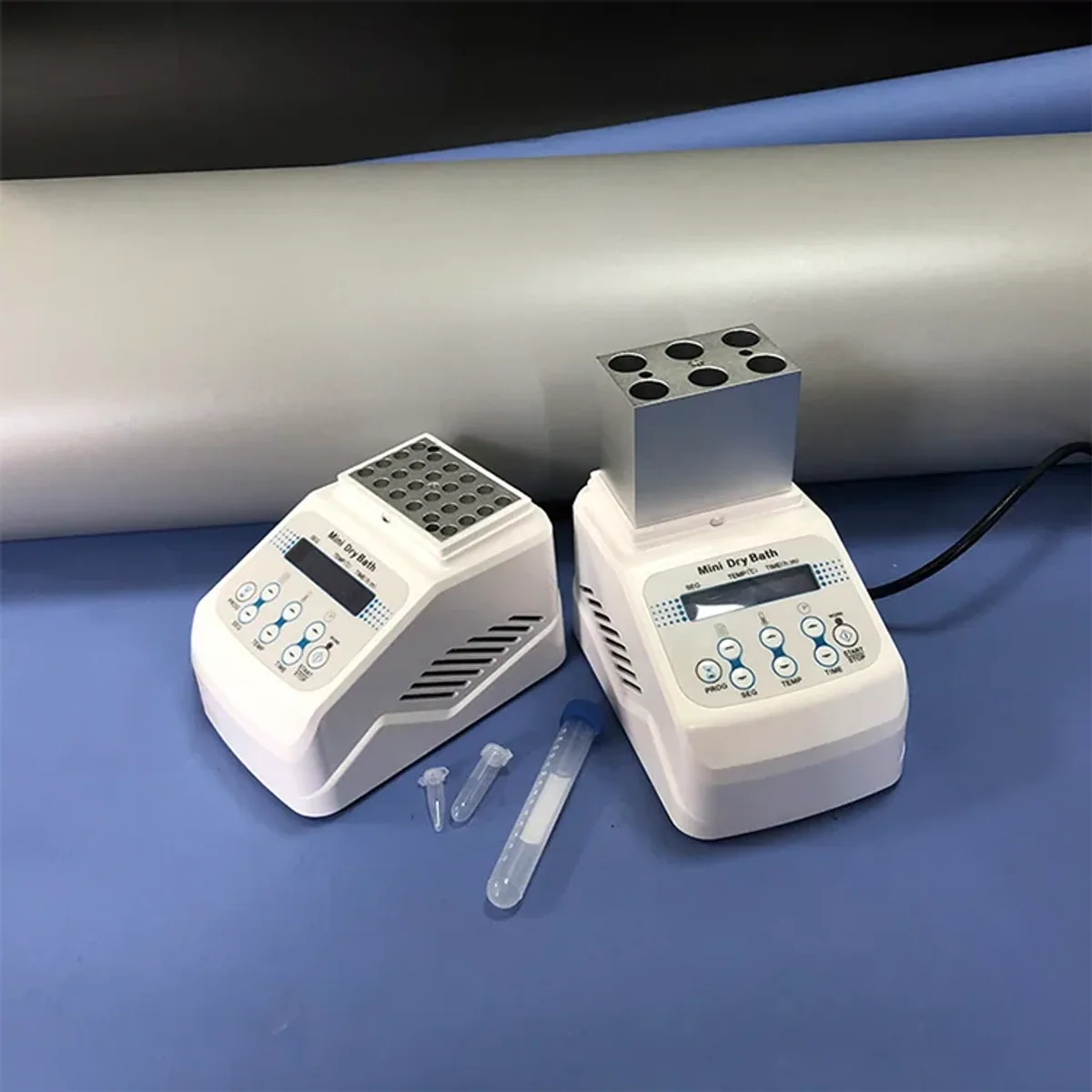
Water Baths & Dry Baths
Dry Bath Incubator M-JSY-H | RT+5 to 100°C | Digital Control | Block Modules
TBS-08926LABO-00072
£186.99
3 products available
A water bath is a temperature-controlled vessel that holds samples at a steady heat by immersing them in heated water. A dry bath, also called a block heater or dry block heater, does the same job with a heated metal block instead of liquid. Compel supplies both types to labs, test houses, production QC teams and maintenance departments that need stable, repeatable heating.
The range here is narrow and focused. You'll find the core formats a working lab uses for incubating samples, thawing, warming reagents and running controlled-temperature tests, without a wide spread of variants to wade through. Check each listing for capacity, temperature range, control type and accuracy before you order. Buying through Compel means you get trade-grade equipment from a distributor that serves industry, with product data you can verify against your method before the unit arrives.
3 products in Water Baths & Dry Baths
Water Baths & Dry Baths
Water Baths & Dry Baths
Water Baths & Dry Baths
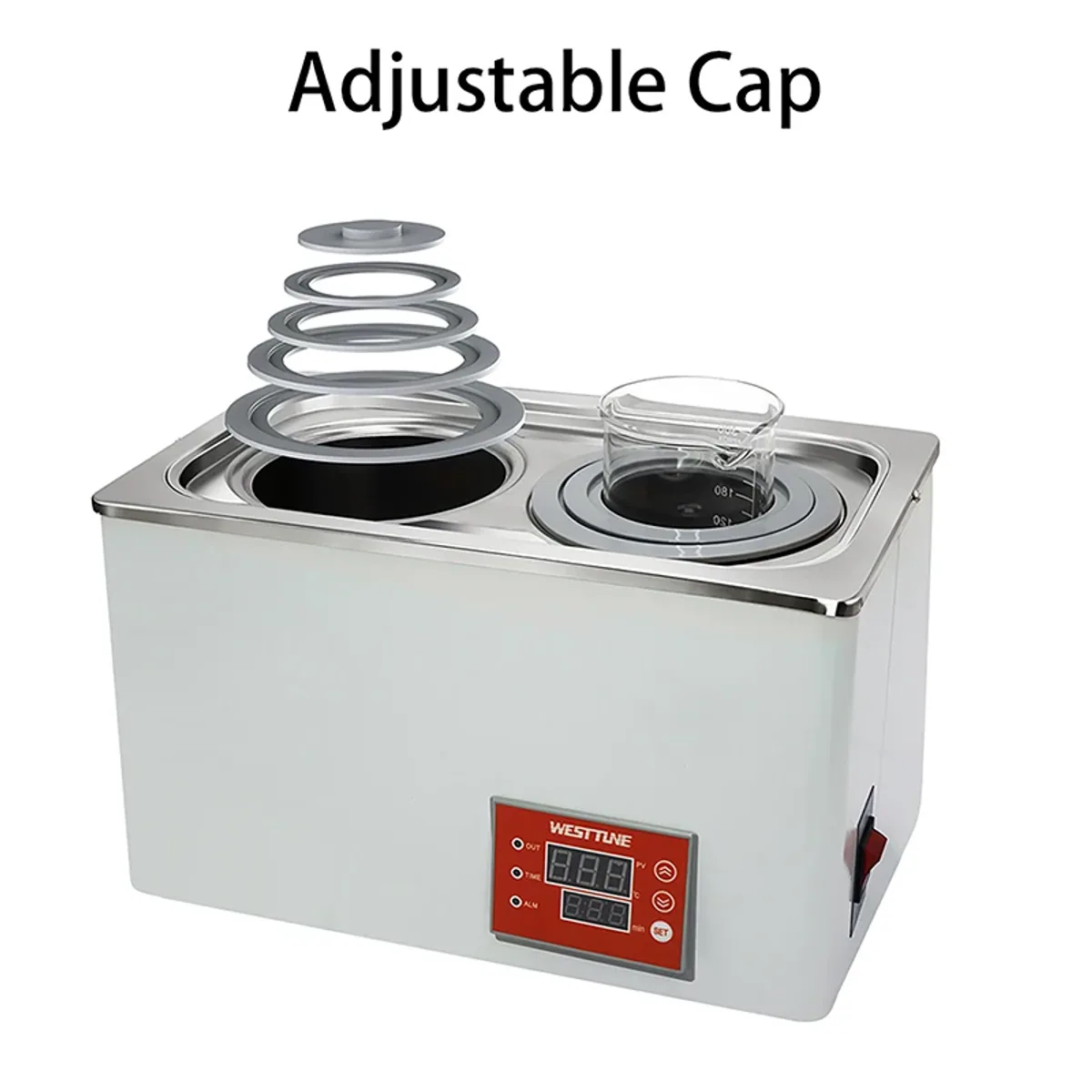
A laboratory water bath gives even heat transfer around the whole vessel. Water surrounds the sample, so odd-shaped flasks, beakers and tubes all heat evenly. That makes it the usual pick for thawing, warming reagents, and tests that call for a liquid medium.
A dry bath uses a metal block drilled to take specific tube or vial sizes. There's no water to top up, no evaporation, and less contamination risk. It suits routine tube work where the vessel format never changes. The trade-off is fit: the block must match your tubes, so confirm the block format on the listing.
Size the unit to your largest vessel plus working clearance, then look at how many samples you run at once. A bath that's too small forces you to batch work. One that's too large wastes time heating and uses more power.
Read the stated temperature range against your actual setpoint, and check how close it sits to the upper and lower limits. Units tend to hold best in the middle of their range. Look at the control type too. Digital controllers generally give finer setpoint resolution than analogue dials, but confirm accuracy and uniformity figures on the datasheet rather than assuming.
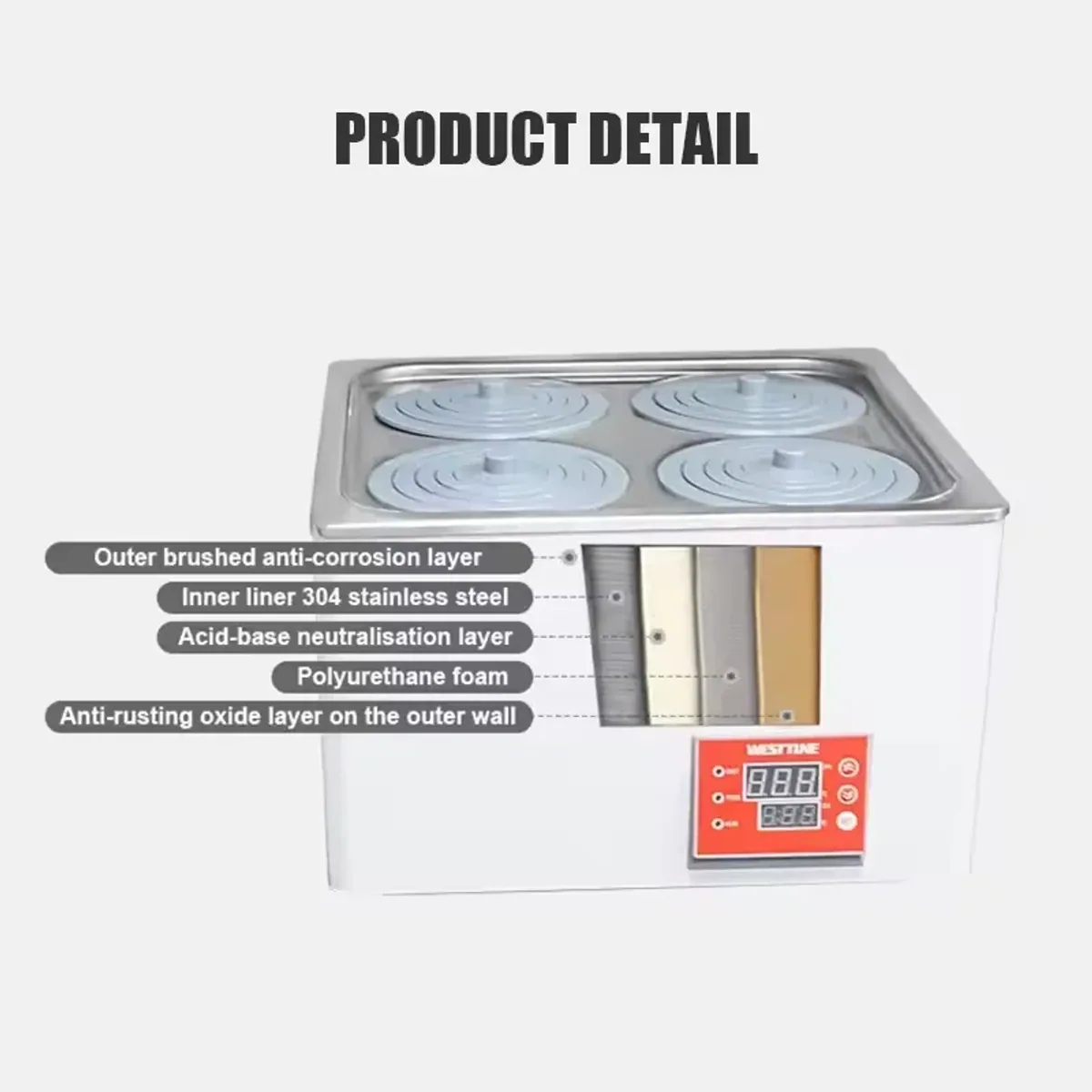
For a lab water bath, tank material matters because the unit sits wet and hot. Stainless steel is the usual choice for durability and easy cleaning. Check the listing for the tank material and whether a lid is supplied. A lid cuts evaporation, helps hold temperature and keeps debris out.
How to use a water bath in a laboratory is straightforward. Fill to the marked level with the water type the manufacturer recommends, set the temperature, let it stabilise, then place samples in. Never heat a dry unit. Run a dry bath at setpoint before loading so the block is at temperature.
Buying guide
We use cookies. Some keep the store working, others show us what to fix. No third-party trackers, and we never sell your data. Learn more about cookies and your privacy