
Timing Belts
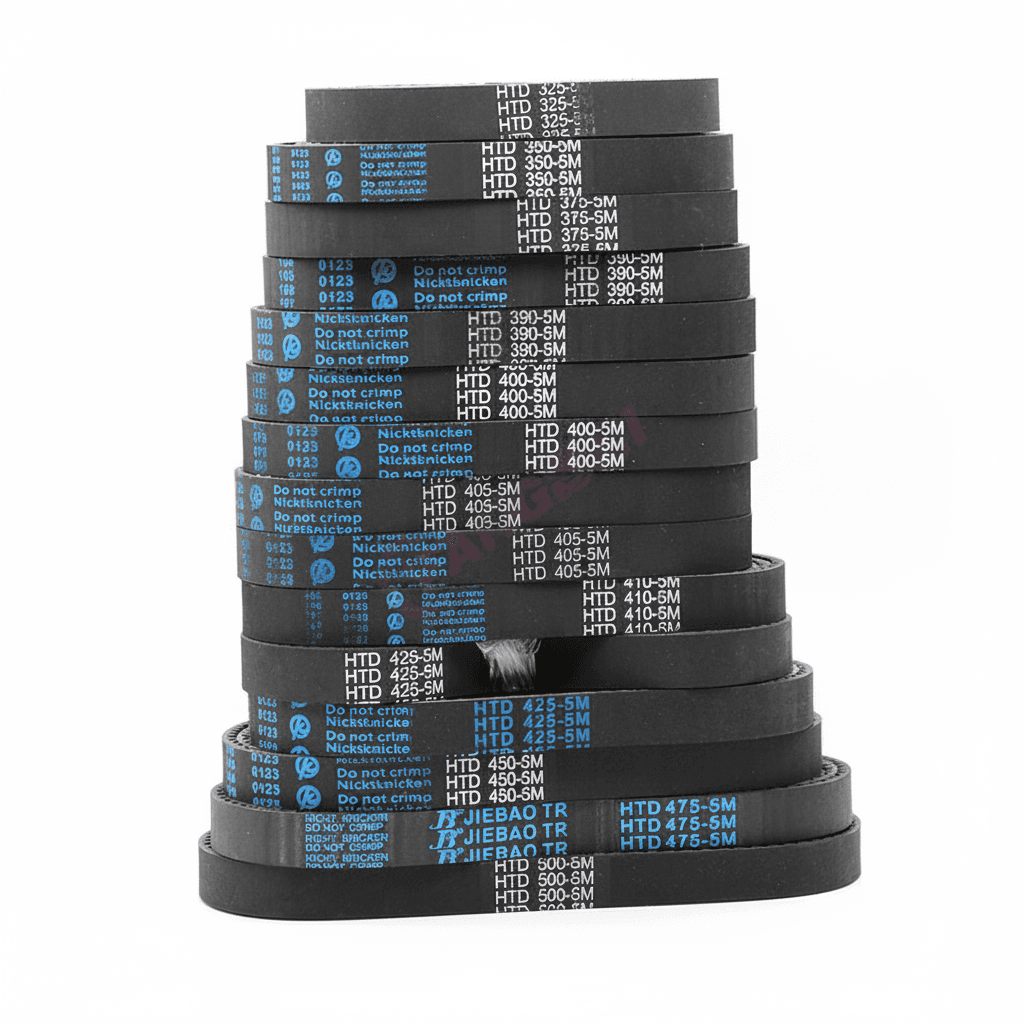
HTD 5M Timing Belt | 15mm Width, Various Lengths | Industrial Grade
CMP-04573TIMI-00001
£29.99
3 products available
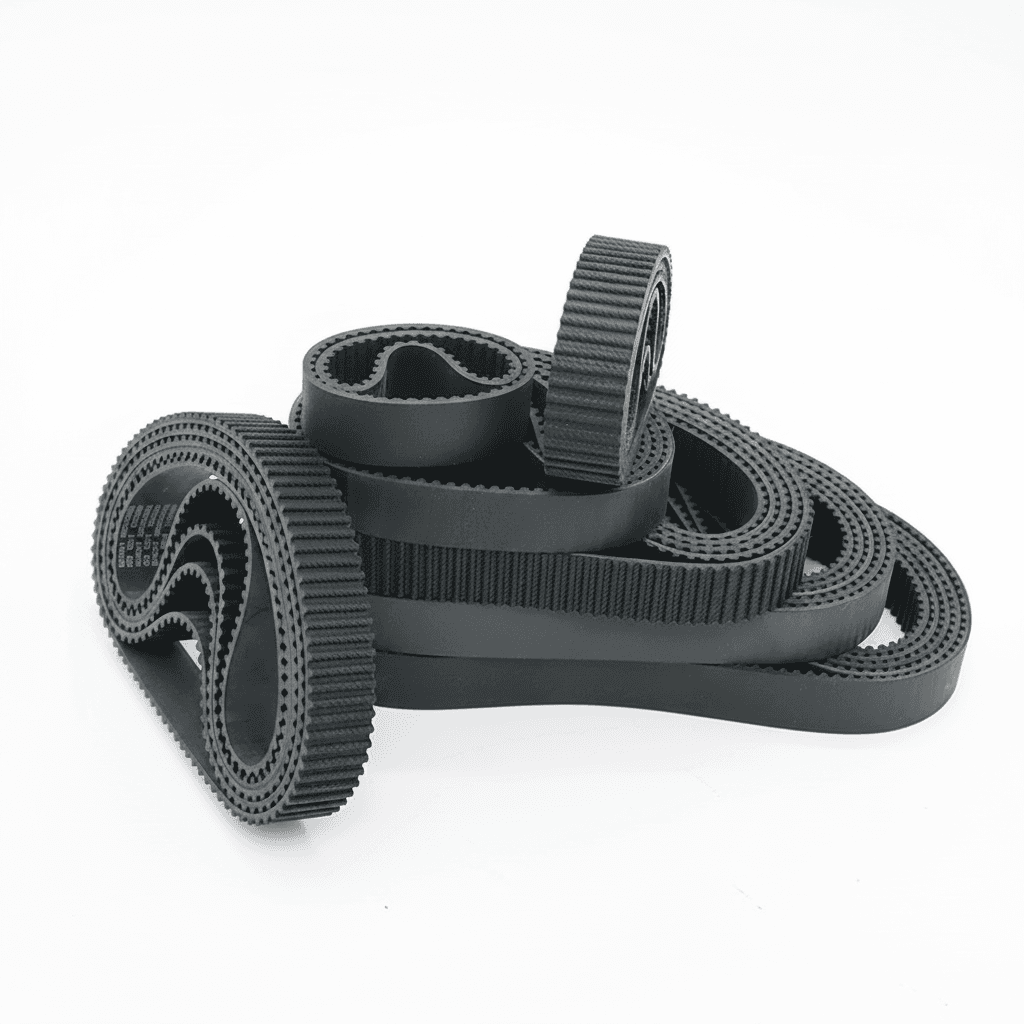
Timing belts, also known as synchronous belts, are used for precision power transmission and motion control in industrial machinery. These belts feature teeth that mesh with a matching toothed pulley, ensuring positive engagement and preventing the slippage common with V-belts. This makes them ideal for applications like conveyors, automation systems, and robotics where exact timing and speed ratios are required.
Compel provides a focused selection of industrial timing belts and pulleys for specific trade applications. Our inventory centers on HTD 3M and HTD 5M profiles, which are common standards in machinery design. We supply compatible closed-loop rubber belts and aluminum alloy pulleys, ensuring you can source core components for a complete synchronous drive system from a single, reliable timing belt supplier.
3 products in Timing Belts
Timing Belts
Timing Belts
Timing Belts
The most important step is selecting the correct belt profile, which defines the tooth shape and pitch (the distance between tooth centers). Our selection focuses on the High Torque Drive (HTD) profile, which uses a rounded tooth design to handle higher torque and reduce stress concentration.
We carry two common pitches: HTD 3M (3mm pitch) and HTD 5M (5mm pitch). HTD 3M belts are suitable for smaller drive systems with lower load requirements. HTD 5M belts have larger teeth and a wider cross-section, making them appropriate for applications demanding higher power transmission.
For a synchronous drive to function, the belt and pulley profiles must match exactly. An HTD 3M belt must be used with an HTD 3M pulley. Any mismatch will lead to improper tooth meshing, rapid wear, and eventual system failure.
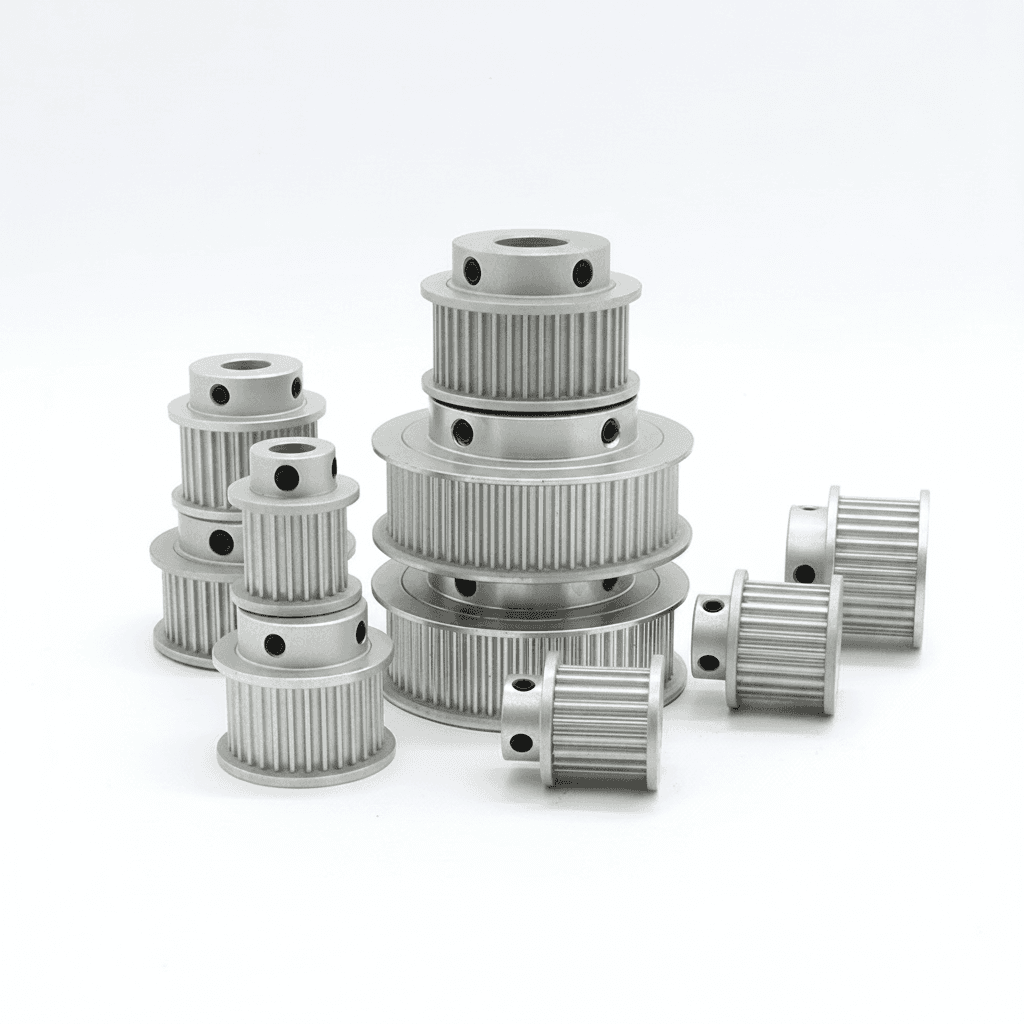
The belt width must also be compatible with the pulley. Our pulleys are designed for specific belt widths, such as 10mm and 15mm. Using a belt that is too wide or too narrow for the pulley will cause tracking issues and reduce the lifespan of the components. The number of teeth on the pulley (e.g., 20T to 60T) determines the drive ratio and should be chosen based on your required output speed.
Our timing belts are made from industrial-grade rubber. This material offers the flexibility needed to wrap around pulleys while providing the durability to transmit power effectively. The rubber construction also helps to dampen vibration within the drive system.
The corresponding timing pulleys are machined from aluminum alloy. This material provides an excellent strength-to-weight ratio, which reduces rotational inertia and allows for faster acceleration and deceleration. Aluminum also offers good corrosion resistance in typical industrial environments.
Buying guide
We use cookies. Some keep the store working, others show us what to fix. No third-party trackers, and we never sell your data. Learn more about cookies and your privacy