Taps & Dies
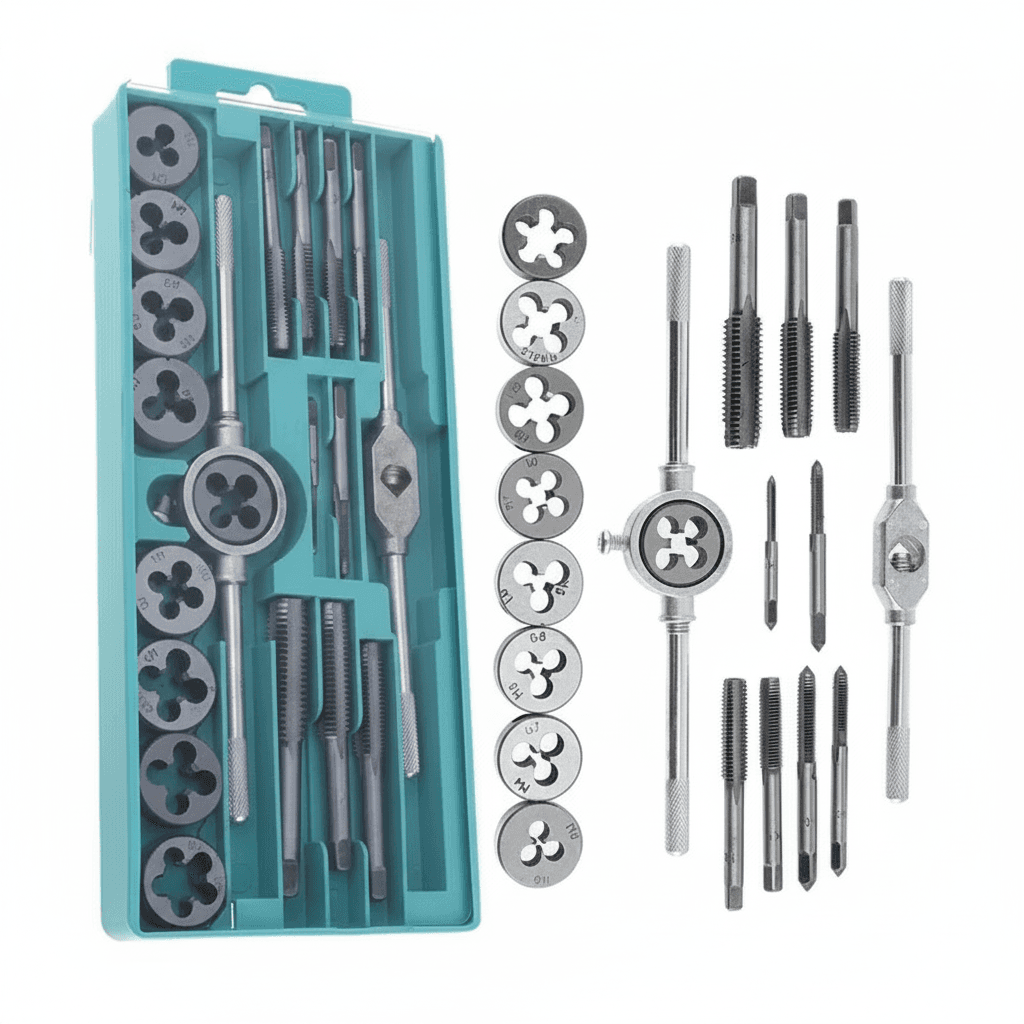
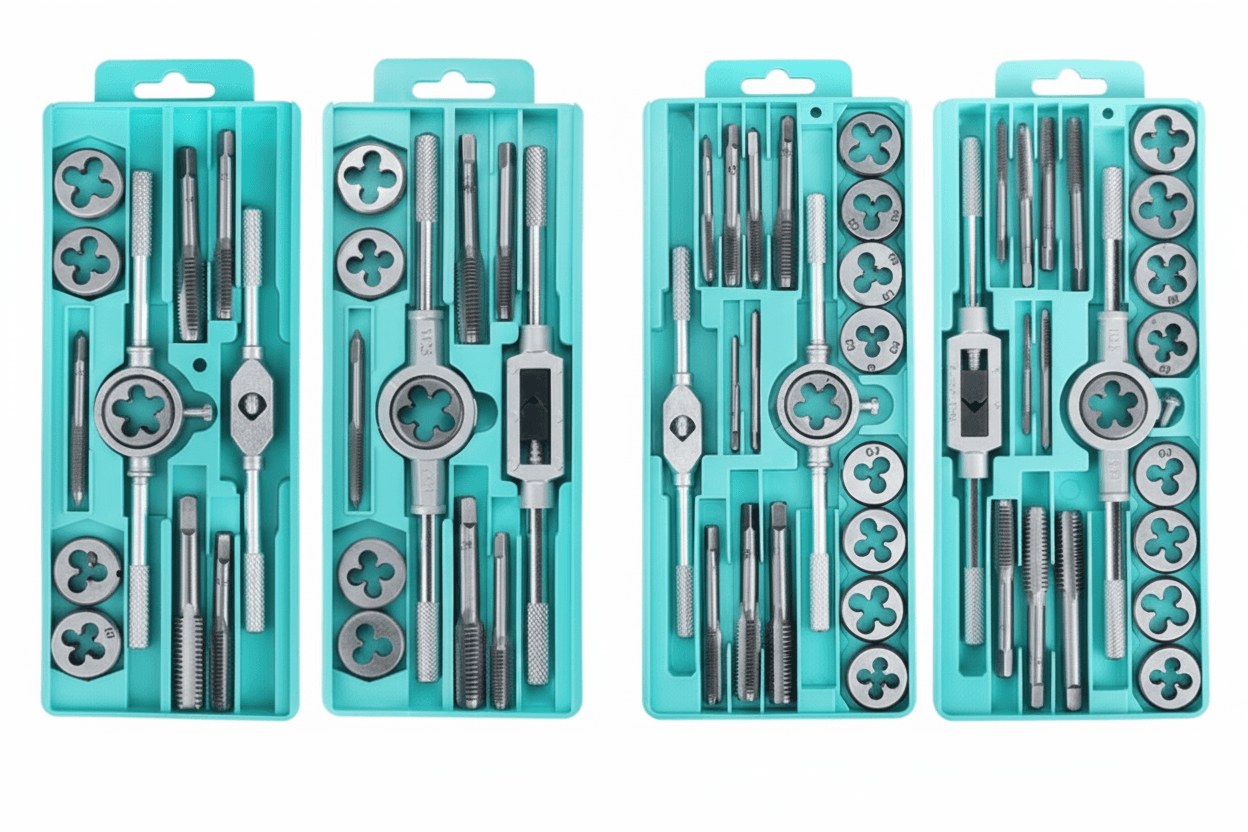
Tap and Die Set | 20-Piece Kit | M3-M12 Mechanical Threading
CMP-04526TAPS-00001
£72.99
3 products available
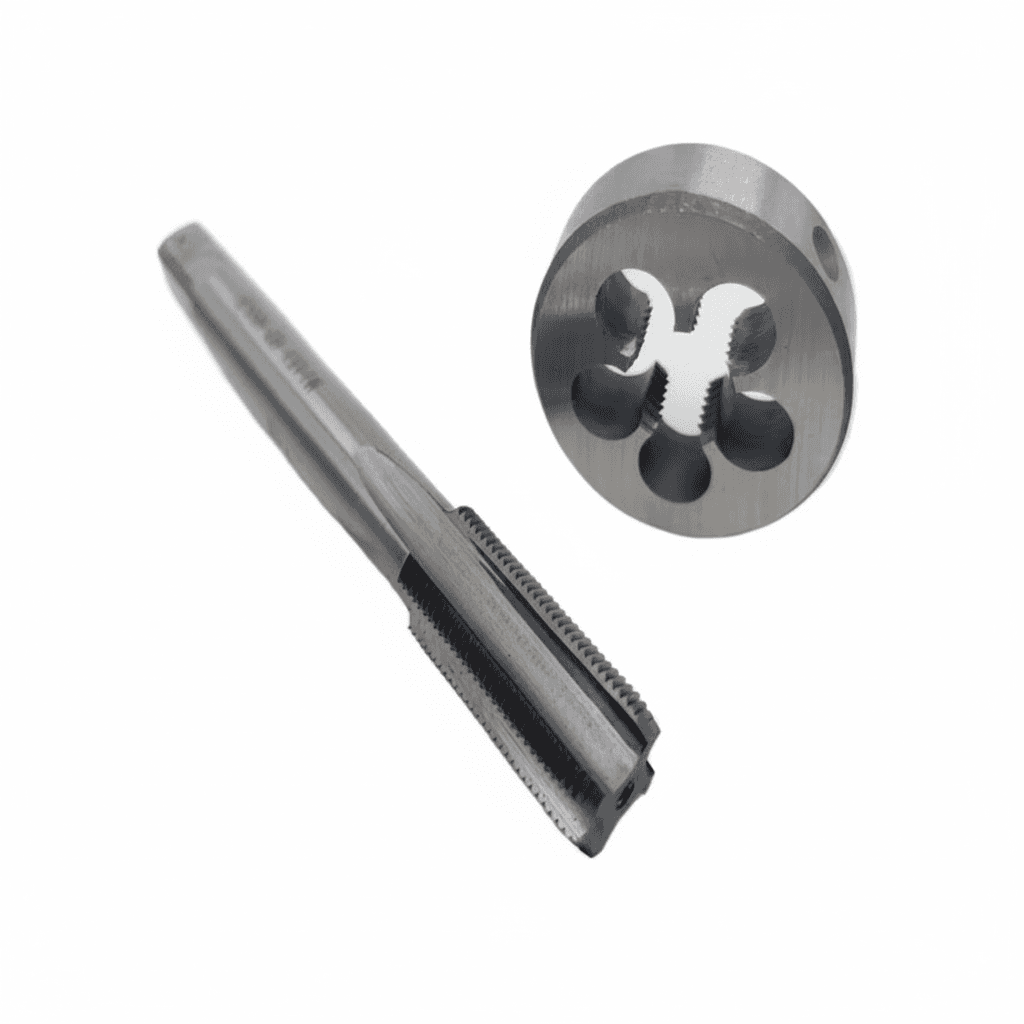
Taps and dies are threading tools used to cut or form screw threads. Taps create internal threads in a hole, while dies cut external threads on a cylindrical rod. These tools are fundamental for manufacturing, assembly, and repair in professional metalworking and mechanical trades.
Compel supplies a focused range of tap and die sets for industrial use. Our selection includes common metric sizes in materials like High-Speed Steel, Alloy Steel, and Carbide to match your application's demands. Find the correct thread cutting tools for creating new threads or performing precise thread repairs in your facility.
3 products in Taps & Dies
The material of your threading tools directly impacts performance and lifespan. Your choice depends on the workpiece material and the production volume.
High-Speed Steel (HSS) offers a good balance of hardness and toughness for general-purpose threading in most ferrous and non-ferrous metals. Alloy steel is a durable option often found in sets intended for general maintenance and thread repair. For the most demanding applications, such as cutting threads in hardened steel or for high-volume production runs, Carbide is the superior choice. It offers the best wear resistance but is more brittle and requires a rigid setup.
Our tap sets are available in standard metric thread sizes, typically ranging from M2 to M22. A set labeled 'M3-M12' will contain taps and dies for various common sizes within that diameter range. Before purchasing, verify that the set includes the specific metric diameters your project requires.
Also consider thread direction. Most fasteners use a standard right-hand thread. However, some applications require a left-hand thread, which tightens counter-clockwise. We offer specific left-hand metric tap & die sets for these specialized mechanical needs.
Hand tap kits often include taper, plug, and bottoming taps. A taper tap has a pronounced chamfer to start a thread easily in a new hole. A plug tap has less taper and is used to cut threads deeper. A bottoming tap has almost no taper and is used to cut threads to the bottom of a blind hole.
The sets we provide are primarily hand screw tap kits. These are designed for manual operation with a tap wrench, giving the operator full control for repair work or low-volume cutting.
Buying guide
We use cookies. Some keep the store working, others show us what to fix. No third-party trackers, and we never sell your data. Learn more about cookies and your privacy