

Polishing Pads
Polishing Pads | Diamond Abrasive for Glass | Wet/Dry Granite & Tile
TBS-06052PADS-00047
£21.99
12 products available
Polishing pads are used with power tools to refine, correct, or apply coatings to a surface. For trade professionals, choosing the correct pad is critical for achieving specified finishes on materials ranging from automotive paint to granite and stainless steel. Compel supplies polishing pads for trade use, including foam, wool, felt, and diamond types, designed for consistent performance in demanding production and repair environments.
Our range covers the common sizes and mounting systems, so you can match a pad with your existing angle grinders, rotary polishers, and drills. We stock pads with M10 and M14 threaded arbors, self-adhesive backings, and shanks for rotary tools. By sourcing the correct pad for the job, you reduce work time, consume fewer materials, and deliver a higher quality result. Find the precise polishing pad for your application here.
12 products in Polishing Pads
Polishing Pads

Polishing Pads

Polishing Pads

Polishing Pads

Polishing Pads

Polishing Pads
Polishing Pads

Polishing Pads

Polishing Pads

Polishing Pads

Polishing Pads

Polishing Pads
The pad material directly controls the cutting action and final finish. Your choice depends entirely on the work surface and the desired outcome.
Foam and sponge pads are the standard for automotive detailing, waxing, and paint correction. They are available in a range of densities, from firm cutting foams for scratch removal to soft finishing foams for applying wax or sealant. High-density foam applicator pads are ideal for manual application of waxes and polishes.
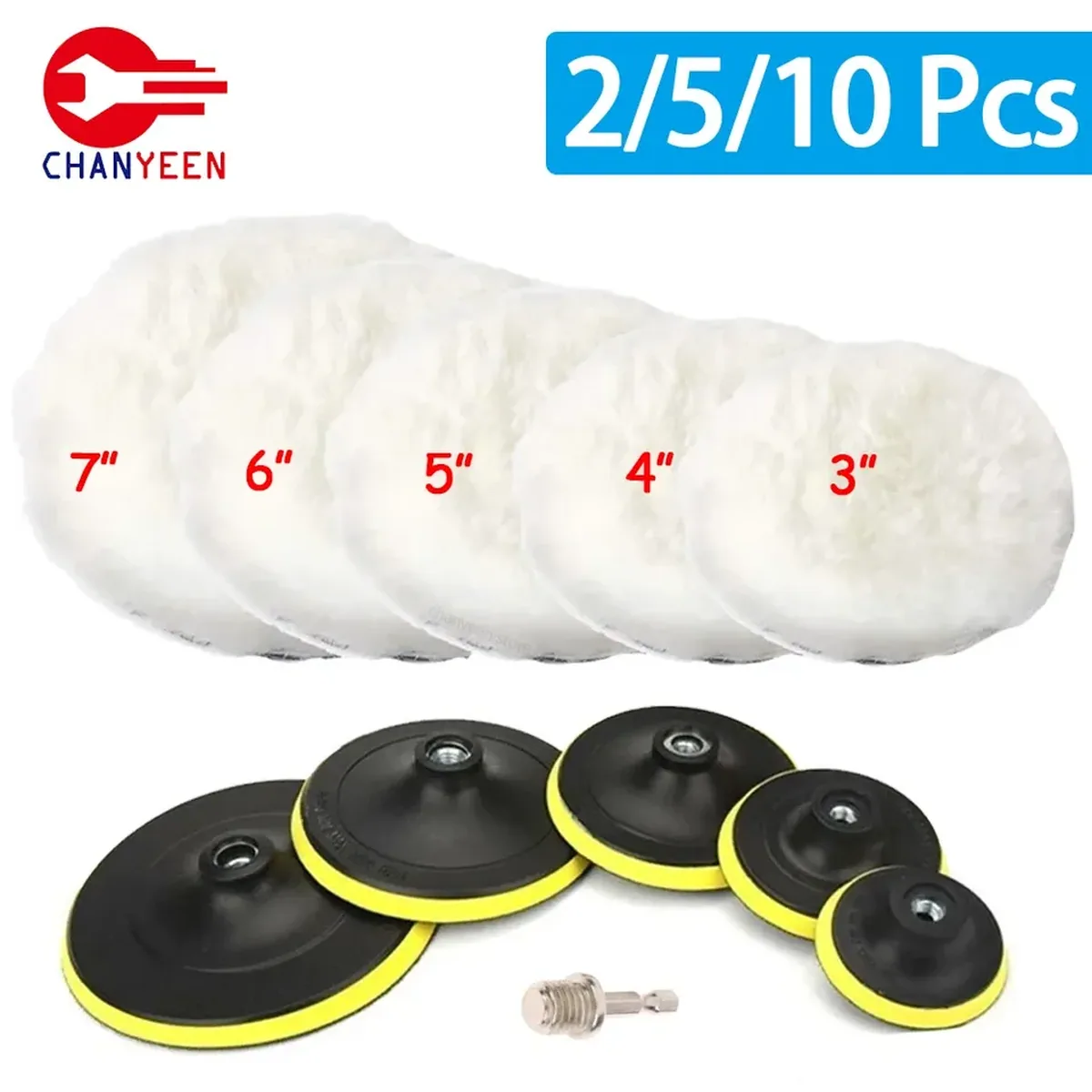
Wool and felt polishing pads offer a more aggressive cut than foam. They are effective for removing heavy oxidation and scratches from paint, as well as for polishing hard surfaces like glass, tile, and stainless steel. Diamond abrasive pads are required for grinding and polishing very hard materials such as granite, marble, quartz, and concrete. These are typically available in a grit sequence for wet or dry use.
To work efficiently and safely, the polishing pad must be compatible with your power tool and appropriately sized for the job. Always match the pad's specifications to your equipment.
First, verify tool compatibility. Pads are designed for specific machines, including high-speed angle grinders, variable-speed rotary polishers, orbital sanders, and handheld drills or rotary tools. Using a pad on an incompatible tool can cause poor results and safety hazards.
Next, check the mounting system. Common types include threaded arbors (M14 or M10 are typical for polishers and grinders), hook-and-loop (self-adhesive) backings, and small-diameter shanks (e.g., 3.2 mm) for precision rotary tools. Finally, select a diameter. Pads range from under 50mm for tight areas to over 175mm for large surfaces. The pad diameter must not exceed the maximum rating for your backing plate or tool.
Buying guide
We use cookies. Some keep the store working, others show us what to fix. No third-party trackers, and we never sell your data. Learn more about cookies and your privacy