
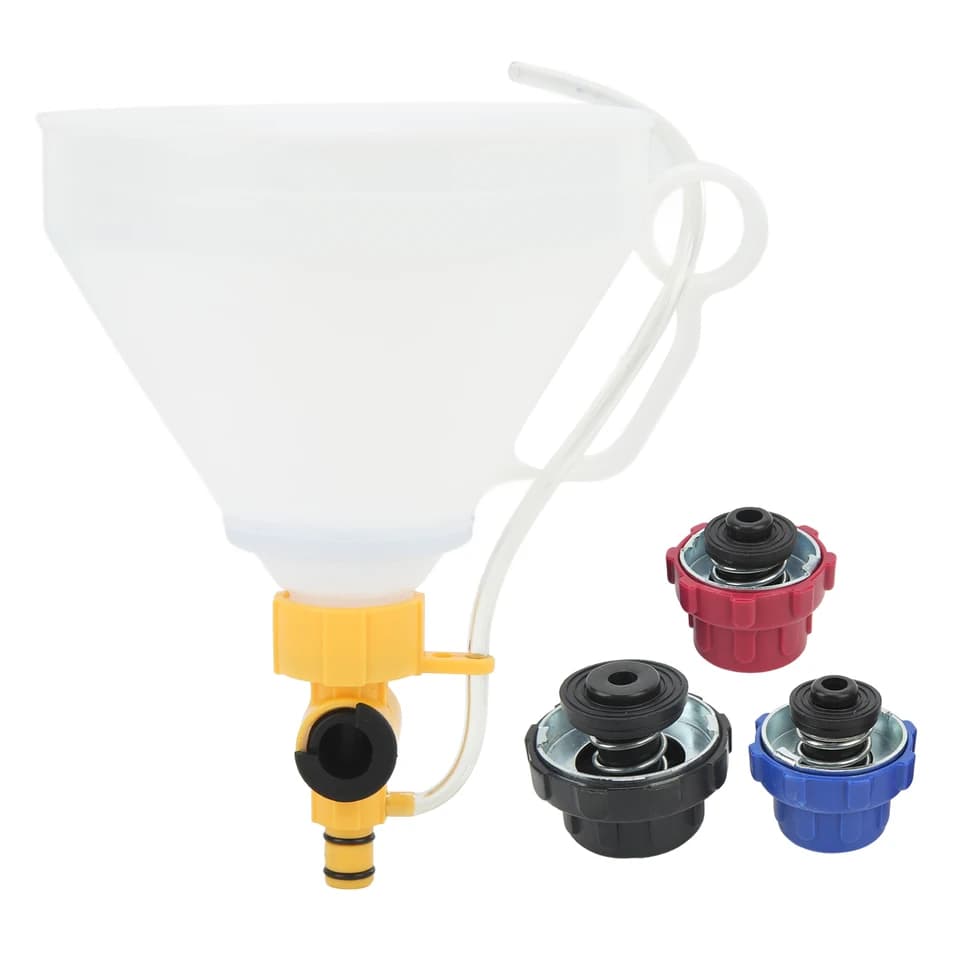
Spill Control
Spill Kit: Car Radiator Coolant Refill Funnel | Spill-Proof Engine Cooling System Filling | 3 Adapters
CMP-03694SPIL-00002
£81.99
3 products available
Industrial spill control prevents machine fluids from contaminating workshop bays and plant floors during equipment servicing. Maintenance teams and machinery operators rely on these tools to capture coolant and service liquids directly at the fill point. At Compel, our focused range targets clean fluid servicing, featuring spill kits and bleeding tools for mechanical systems. While broader spill control products include absorbent pads and spill containment barriers, our focused inventory zeroes in on sealed transfer systems that stop leaks before liquids escape.
Using sealed fluid transfer hardware stops messy radiator bleeds and uncontained overflows in transport bays and plant rooms. Every kit in our selection is vetted for shop durability, with dependable polymers, brass fittings, and secure grips. Compel provides trade buyers with accurate technical fitment data and swift international dispatch on every order.
3 products in Spill Control
Spill Control
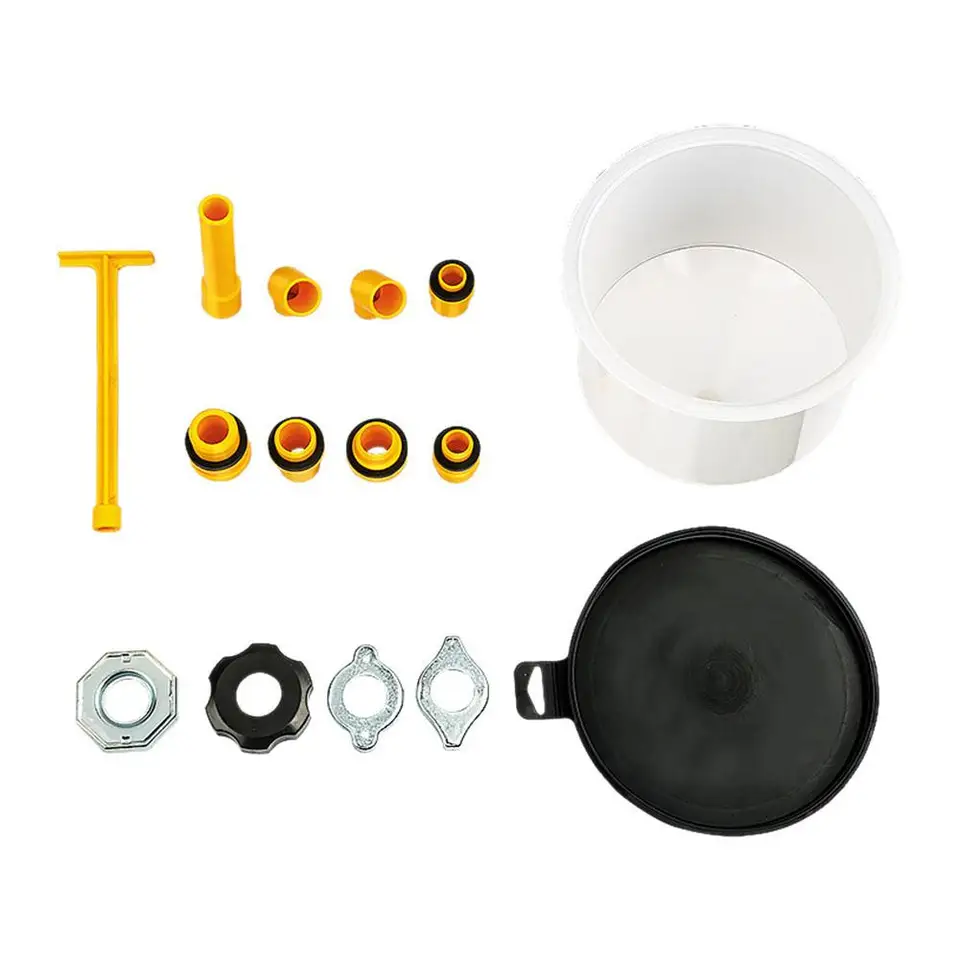
Spill Control
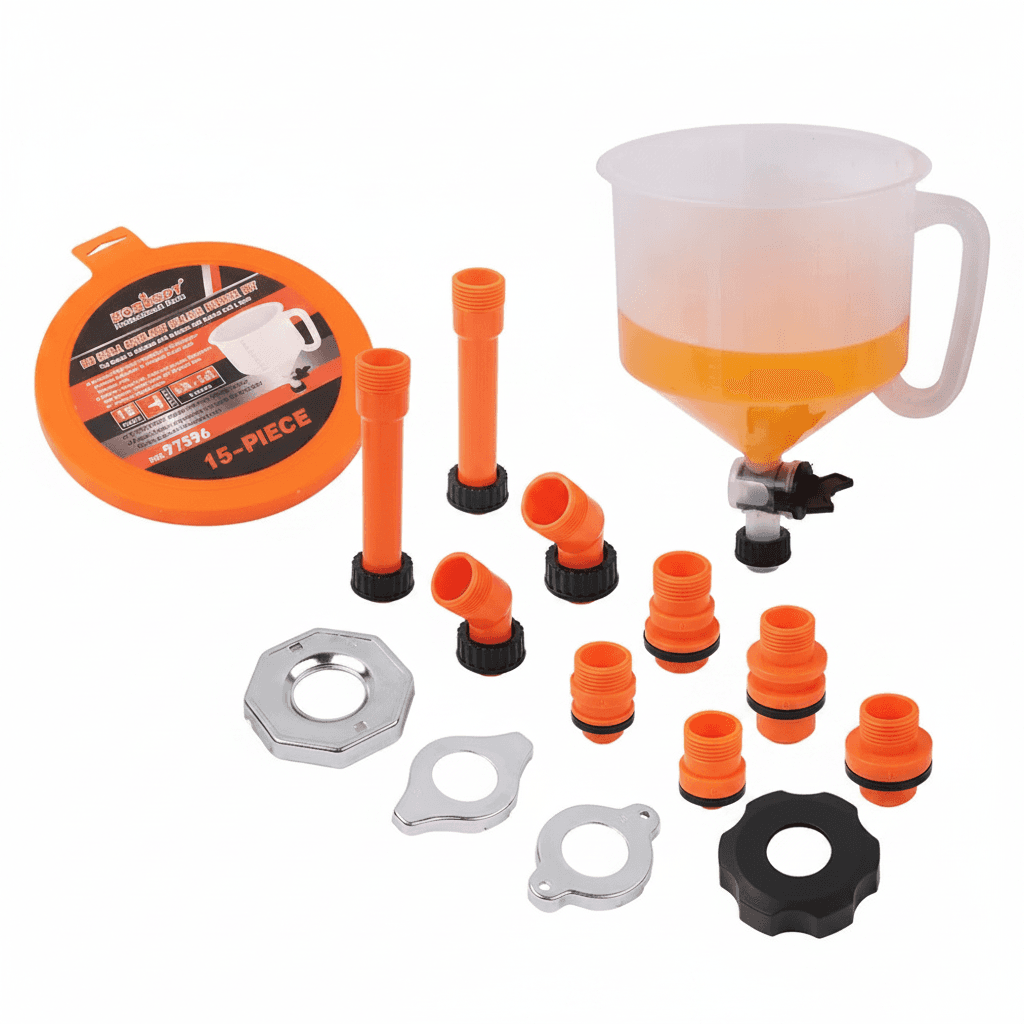 Out of stock
Spill Control
Coolant and hydraulic fluid service demands materials that withstand thermal shifts and chemical exposure. Standard plastic funnels offer basic fluid resistance, but shop environments benefit from reinforced materials. High-grade ABS plastic maintains rigid tolerances under warm radiator fluid cycles without warping or cracking.
Fittings take high torque during threaded engagement. Look for assemblies built with brass components or steel with ergonomic grip handles to resist thread stripping. Brass hardware provides long service life against corrosion when handling antifreeze formulations, making it ideal for continuous maintenance work.
Preventing fluid escape begins with an airtight seal at the reservoir neck. Spill-free refilling systems use dedicated neck adapters rather than universal friction cones. Sizing mismatched caps leads to air pockets in cooling circuits and fluid pooling around machinery bases.
Review vehicle or equipment make before selecting adapter hardware. For example, specific kits include dedicated black adapters for Ford and Chrysler systems, while a blue adapter matches Suzuki fill points. Verifying cap thread pitch and internal diameter prevents backpressure leaks during active burping procedures.
Primary spill control focuses on capturing liquids at the discharge or inlet point. Sealed funnel kits prevent bubbles from spitting glycol across drive belts and alternator windings. When working on machinery or circuits pulling 3 A current, keeping fluid strictly contained prevents electrical shorts and thermal hazards.
For complete shop safety, combine source-capture tools with secondary defenses. Place an oil absorbent roll or spill mat beneath machinery during pump swaps to collect accidental hose drips. Larger chemical spill kit units and a heavy-duty spill pallet remain advisable when decanting drums or storing bulk fluid containers in your workshop.
Buying guide
We use cookies. Some keep the store working, others show us what to fix. No third-party trackers, and we never sell your data. Learn more about cookies and your privacy