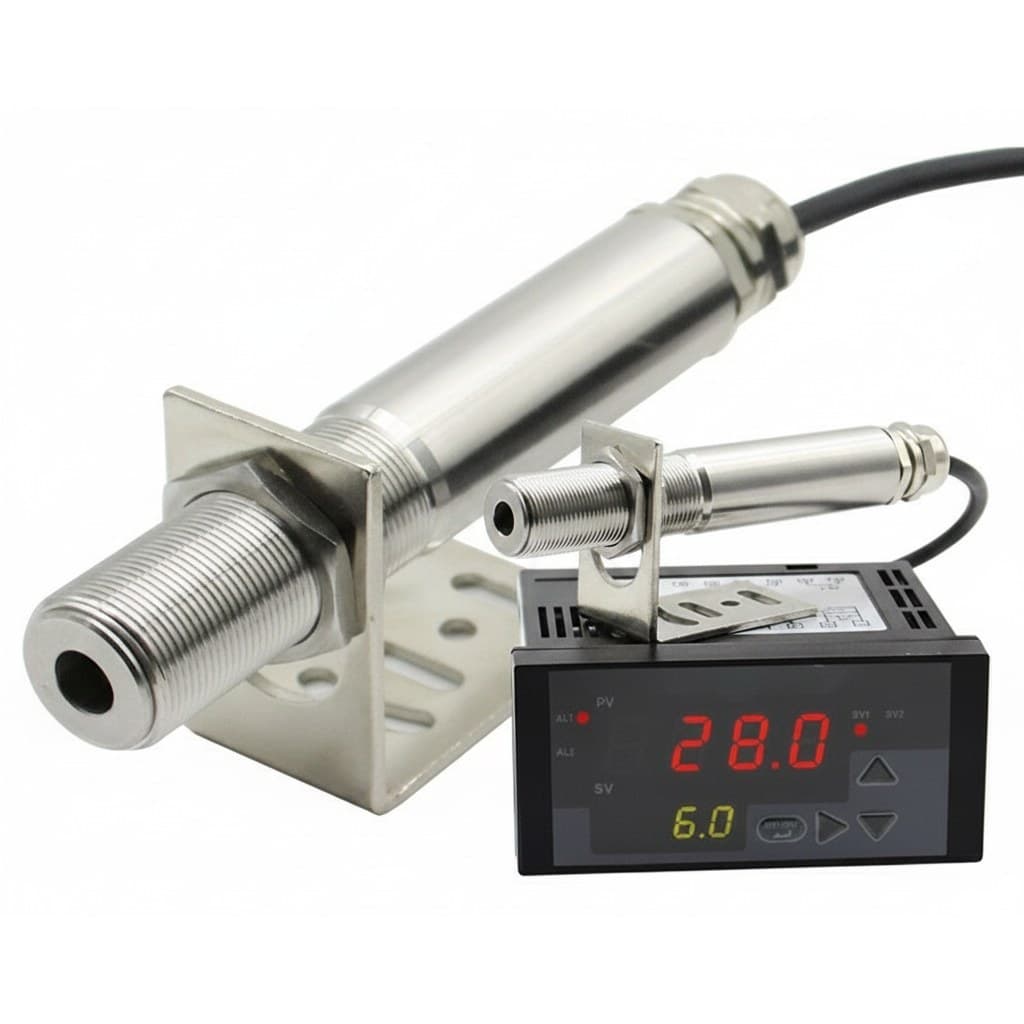

Infrared Temperature
Thermometer | -50°C to 800°C Range | Non-Contact Laser Point
TBS-06480TEMP-00002
£43.99
2 products available
An infrared temperature sensor allows for precise, non-contact temperature readings in industrial and machinery settings. These devices measure thermal radiation to determine surface temperature from a safe distance, ideal for monitoring moving parts, high-temperature processes, or hard-to-reach equipment. This method avoids product contamination and sensor damage.
Compel offers a focused selection of infrared temperature instruments for professional trades. Our range includes handheld digital infrared thermometers for diagnostics and maintenance, as well as industrial infrared temperature sensors with 4-20mA outputs for integration into process control systems. Find reliable tools for accurate non-contact temperature measurement.
Your first decision is how the device will be used. Handheld infrared thermometers are portable tools for spot checks, diagnostics, and preventive maintenance. They are useful for quickly assessing the temperature of motors, circuit breakers, and HVAC systems. Some models include a laser pointer for precise aiming or a hygrometer to measure humidity.
A fixed-mount industrial infrared temperature sensor is designed for permanent installation. It provides continuous, real-time data for process control and automation. These sensors typically feature a standard 4-20mA output signal, allowing them to connect directly to PLCs, data loggers, and control panels for automated monitoring and system adjustments.
Verify that the sensor's temperature range covers your application's requirements. The instruments available cover a common industrial range from -50°C to 800°C. Ensure your minimum and maximum process temperatures fall comfortably within this scope.
For fixed sensors, the output signal is a primary concern for system compatibility. A 4-20mA analog output is an industry standard that is resistant to electrical noise over long cable runs, making it suitable for most industrial control systems.
Another factor is emissivity, which is a material's ability to emit thermal energy. Different materials have different emissivity values. For accurate readings, the sensor must be set to match the target material's emissivity. Check the product datasheet for information on adjustable emissivity settings.
Buying guide
We use cookies. Some keep the store working, others show us what to fix. No third-party trackers, and we never sell your data. Learn more about cookies and your privacy