
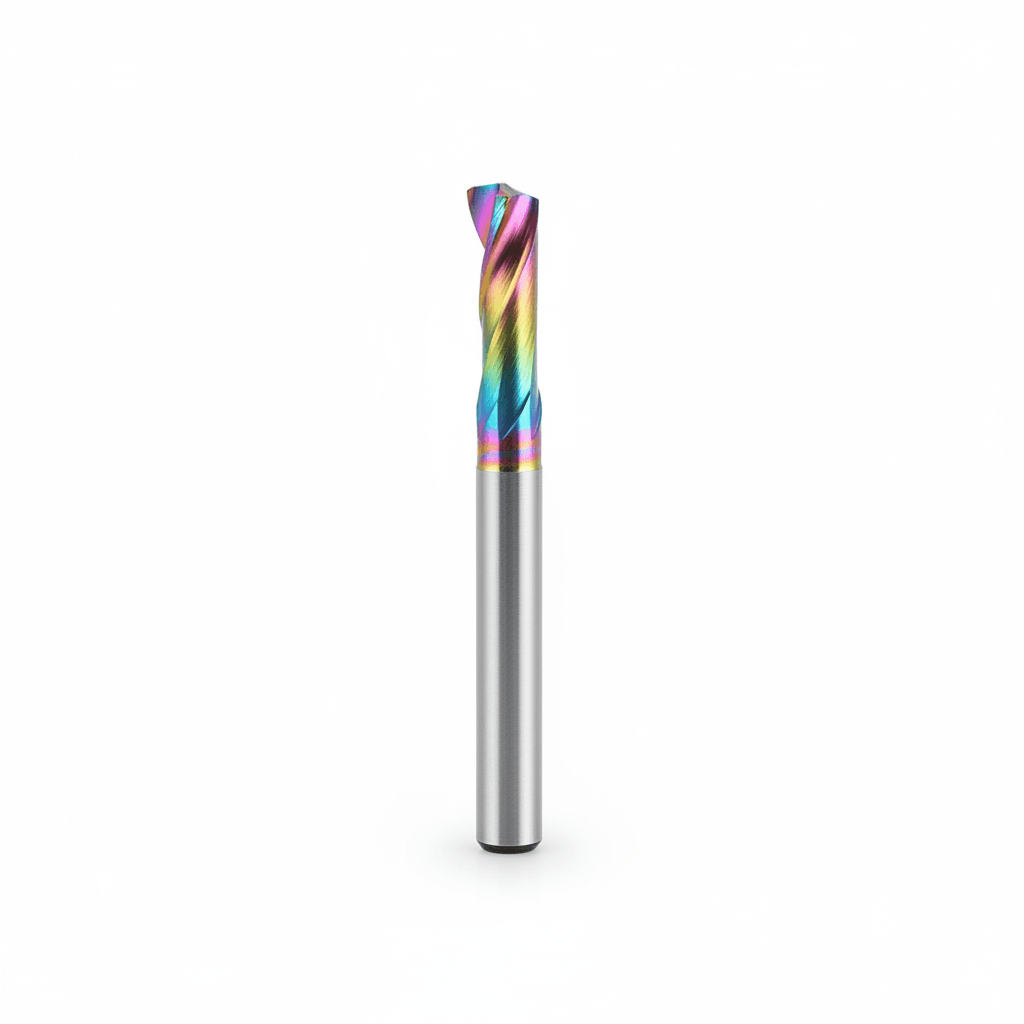
End Mills
Flute End Mill | DLC Coated Bit | 3.175mm-8mm for Aluminum CNC
CMP-04531ENDM-00001
£35.99
3 products available
End mills are rotating milling cutters used in milling machines and CNC machining centers to perform a variety of cutting operations. These tools are fundamental in industrial metalworking, fabrication, and parts production for removing material with high precision. While many types exist, including HSS end mills for general work, our catalog focuses on high-performance solid carbide cutters for demanding applications.
We supply a curated range of carbide end mills designed for specific tasks like aluminum milling and CNC engraving. Our selection features tools made from solid carbide alloy and high-hardness tungsten steel, with advanced coatings like DLC and TiC for extended life. This focused approach ensures you get a milling cutter optimized for performance and a superior finish in its intended application.
3 products in End Mills
End Mills
End Mills
End Mills
The material of an end mill determines its hardness, heat resistance, and cutting speed capabilities. Our selection is centered on carbide and tungsten steel, materials chosen for their superior performance over traditional High-Speed Steel (HSS) in CNC environments.
Tungsten steel variants can achieve high hardness ratings, such as HRC65, allowing them to cut harder materials and resist wear at high temperatures. Solid carbide offers an excellent balance of toughness and wear resistance for consistent results. This focus on carbide tooling supports high-speed machining strategies and provides longer service life in production settings.
The number of flutes, or cutting edges, directly impacts chip evacuation and surface finish. The choice between a single-flute and a multi-flute design depends entirely on the material being machined.
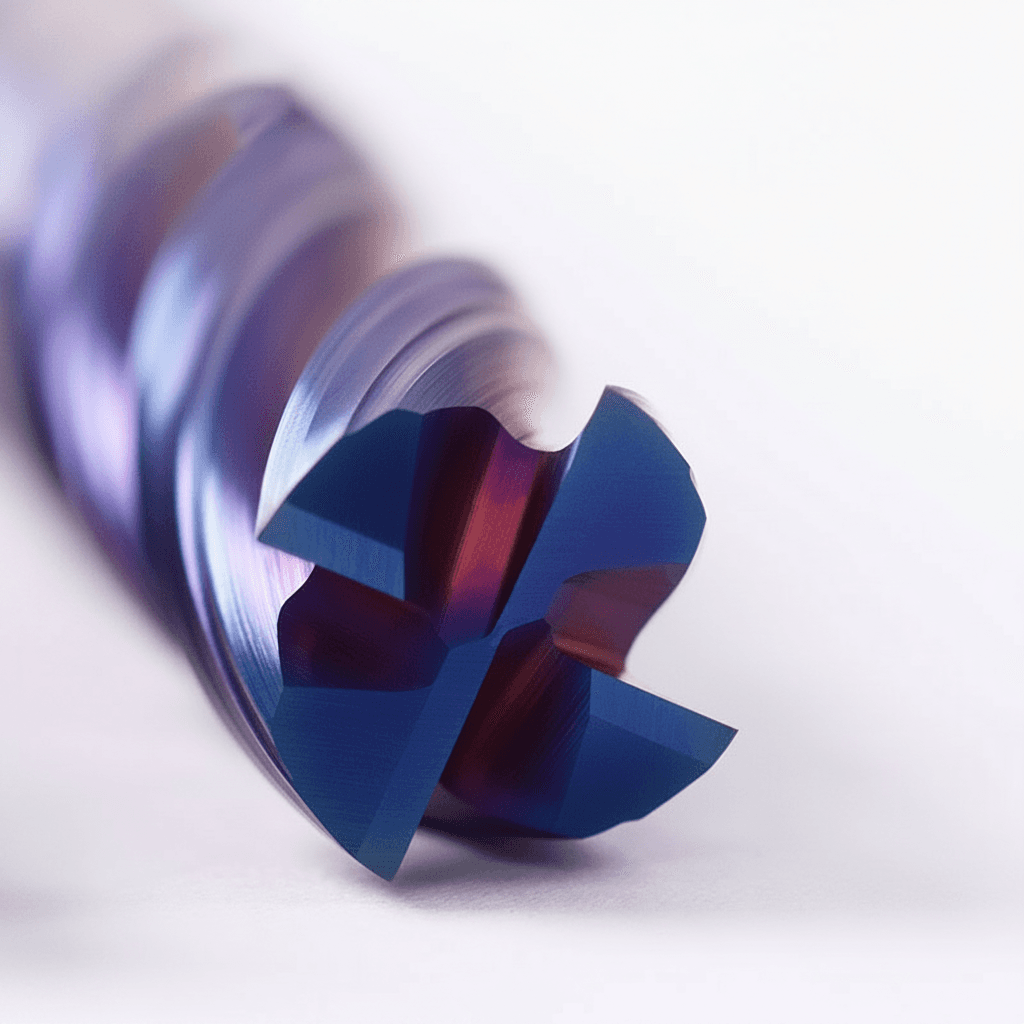
Single-flute end mills have a large open area that allows for rapid evacuation of large chips. This is critical when machining soft, gummy materials like aluminum, as it prevents chips from melting and welding to the cutter. In contrast, 4-flute end mills are stronger and more rigid. With more cutting edges engaged, they produce a much finer surface finish, making them suitable for finishing passes and milling harder materials where chip size is smaller.
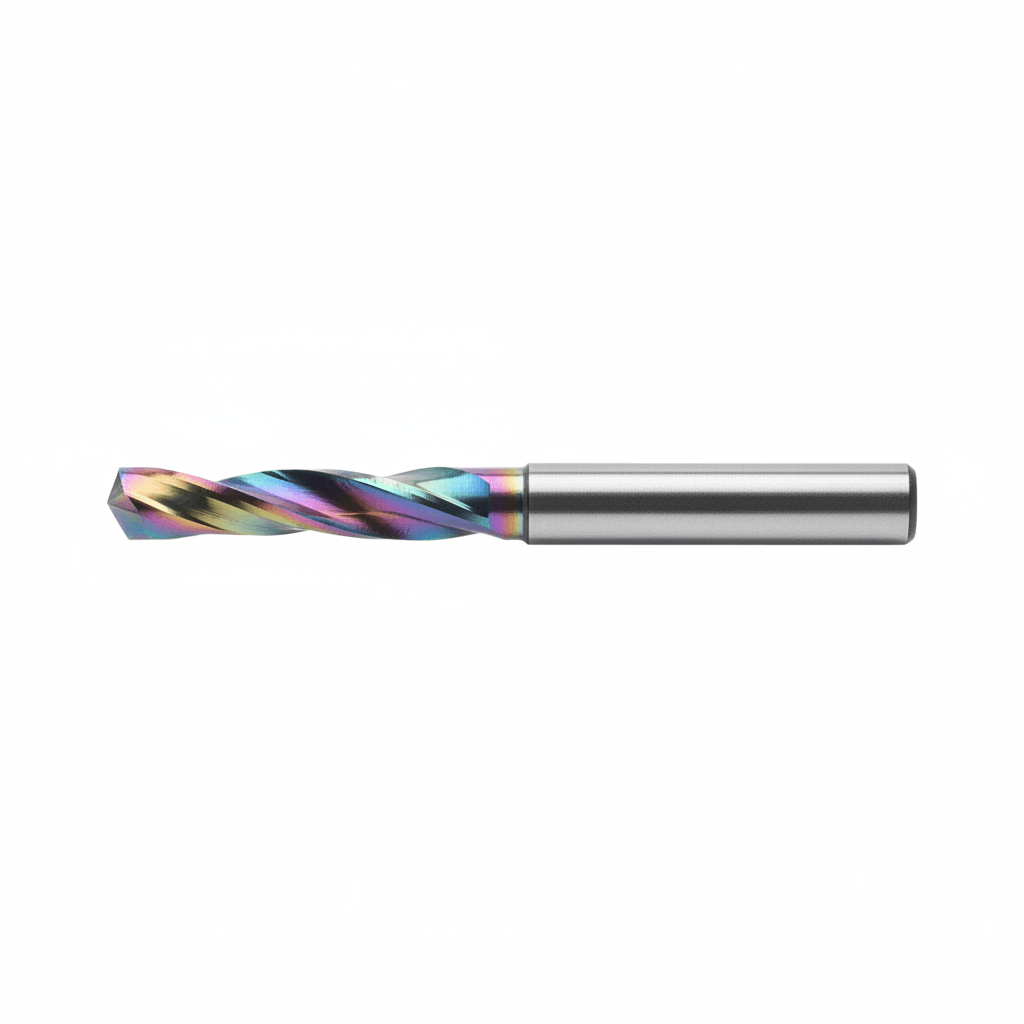
A coating is a micro-thin layer applied to the end mill that enhances its performance by increasing surface hardness and lubricity. Our selection includes cutters with DLC and TiC coatings, each suited for different applications.
A DLC (Diamond-Like Carbon) coating is extremely slick and hard, making it ideal for machining non-ferrous materials. It significantly reduces friction and prevents aluminum from sticking to the tool. A TiC (Titanium Carbide) coating provides excellent wear resistance, increasing tool life when cutting materials that cause significant abrasion on the cutting edge.
Buying guide
We use cookies. Some keep the store working, others show us what to fix. No third-party trackers, and we never sell your data. Learn more about cookies and your privacy