
Bearings
Ball Bearings 608ZZ-687ZZ | Deep Groove Miniature | Skateboard & 3D Printer
CMP-04578BEAR-00001
£24.99
3 products available
Bearings are components that enable rotational or linear movement while reducing friction between moving parts. For industrial applications, selecting the correct industrial bearings is vital for machinery uptime and performance. Compel is a reliable bearing supplier focused on the specific components needed for maintenance, repair, and operations (MRO) in machinery and light equipment.
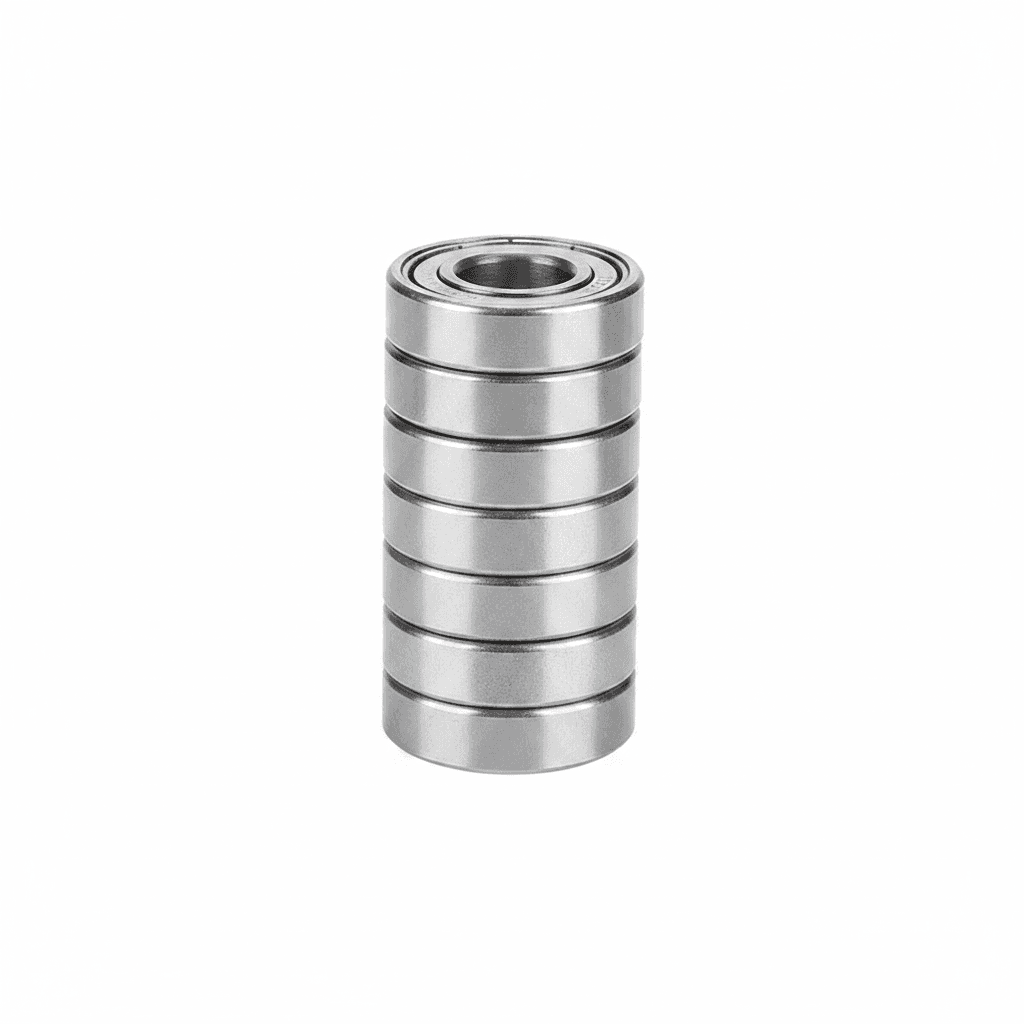
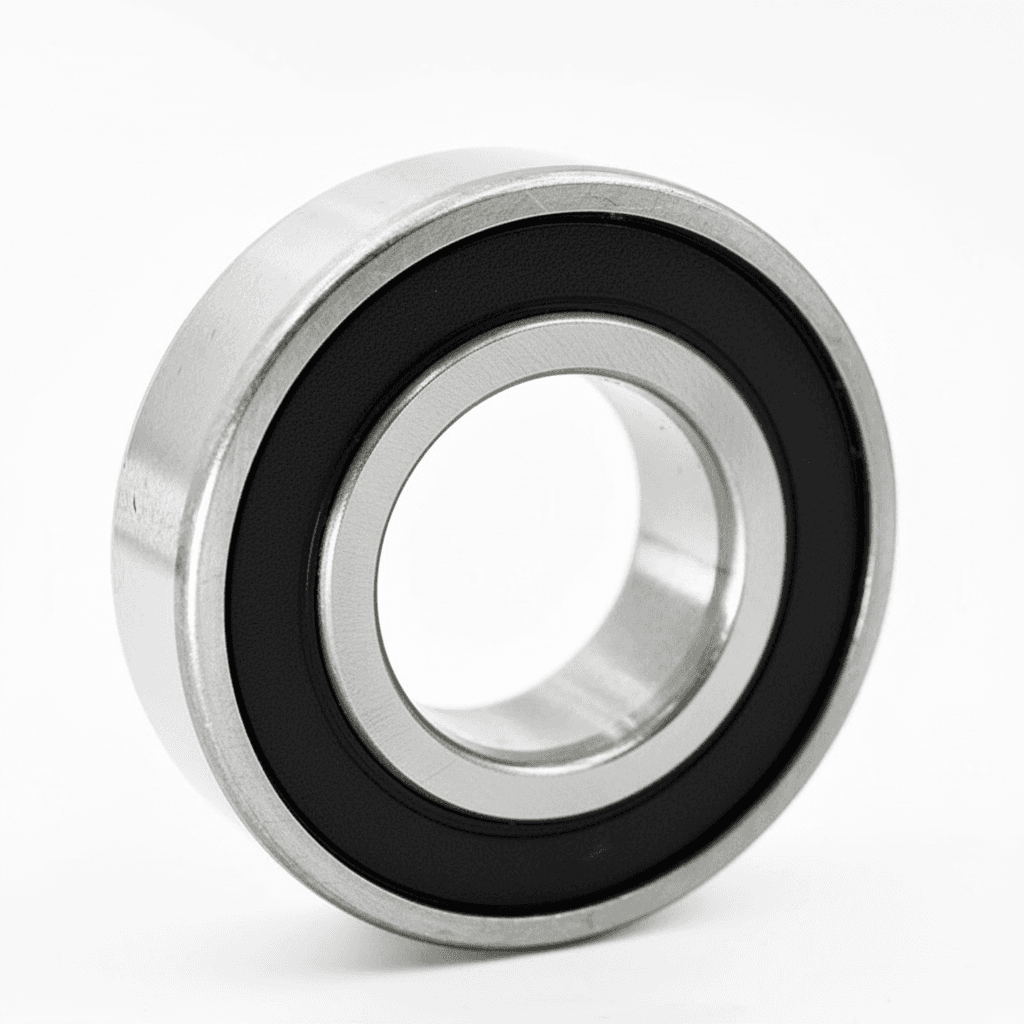
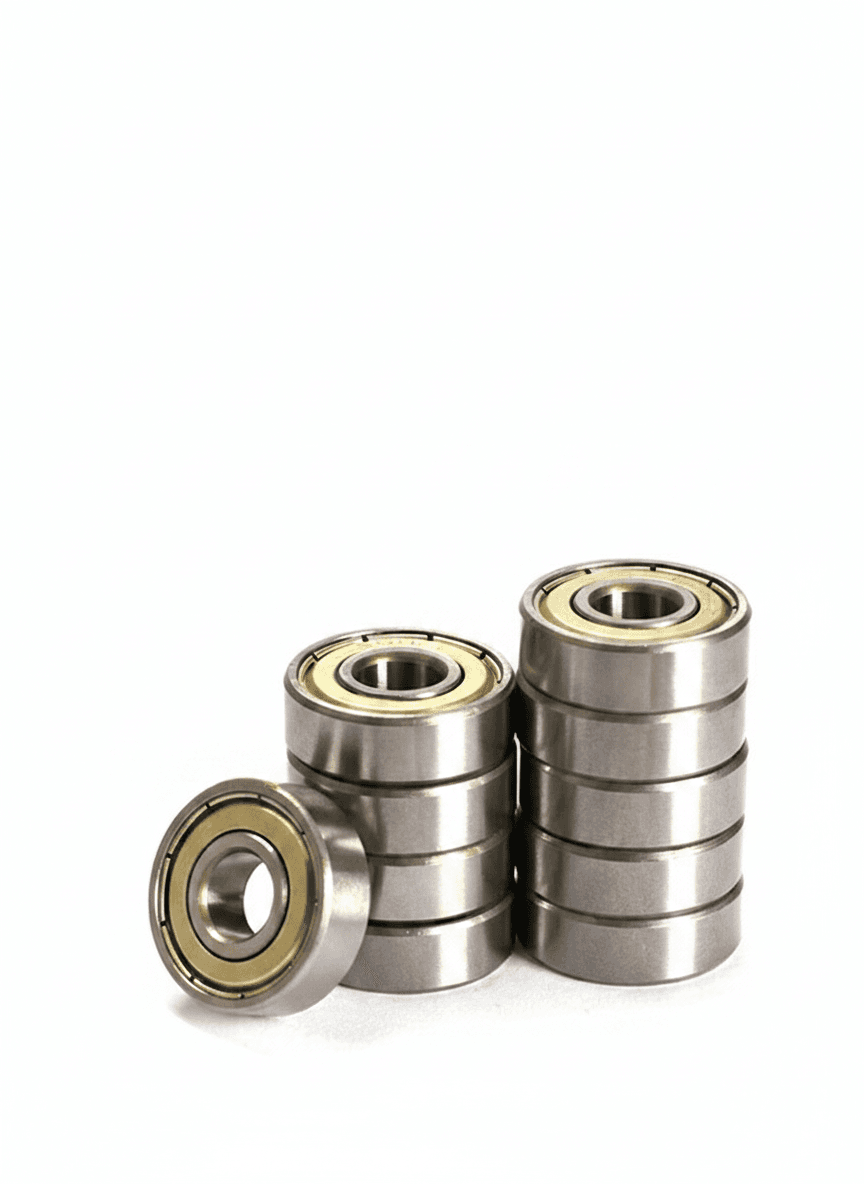
Our selection centers on deep groove ball bearings, a widely used type suitable for high speeds and both radial and axial loads. We offer standard sizes with rubber seals (2RS) for protection against contaminants, and miniature bearings with metal shields (ZZ) for applications like 3D printers or conveyor rollers. When you need dependable, standard-sized bearings for common industrial tasks, Compel provides a direct source.
3 products in Bearings
Bearings
Bearings
 Out of stock
Bearings
Most industrial MRO tasks involve replacing a worn bearing with an identical part. The most common of all bearing types is the deep groove ball bearing, designed to handle radial and some axial loads at high speeds. Before ordering, confirm the required dimensions.
The most accurate way to identify a bearing is by the number etched on its side. If this is unreadable, you must measure its three dimensions: inner diameter (ID), outer diameter (OD), and width. For example, a bearing listed as 10x26x8mm has a 10mm inner diameter, a 26mm outer diameter, and is 8mm wide.
The suffix on a bearing number, such as 2RS or ZZ, indicates its closure type, which is for its lifespan and performance. This choice depends on the operating environment.
2RS bearings feature two rubber seals. These seals make light contact with the inner ring to provide excellent protection against moisture, dust, and other contaminants. This makes them ideal for general industrial bearings used in machinery where some exposure to debris is expected. The contact seal creates slightly more friction than a shield.
ZZ bearings have two non-contact metal shields. These shields prevent larger particles from entering the bearing without adding rotational friction. This makes them a better choice for higher-speed applications or internal components where the primary contaminant is dust, such as in 3D printers or small motors.
The operating environment also dictates the best material for your bearings. Our selection includes options in both standard bearing steel and stainless steel.
Bearing steel (also known as chrome steel) is the industry standard. It offers high hardness, excellent fatigue resistance, and a high load capacity, making it suitable for most controlled industrial environments.
Stainless steel provides good corrosion resistance. Choose stainless steel for applications with exposure to moisture, humidity, or washdown processes where standard steel would rust. While its load capacity is typically lower than that of bearing steel, its resistance to corrosion is in certain settings.
Buying guide
We use cookies. Some keep the store working, others show us what to fix. No third-party trackers, and we never sell your data. Learn more about cookies and your privacy