
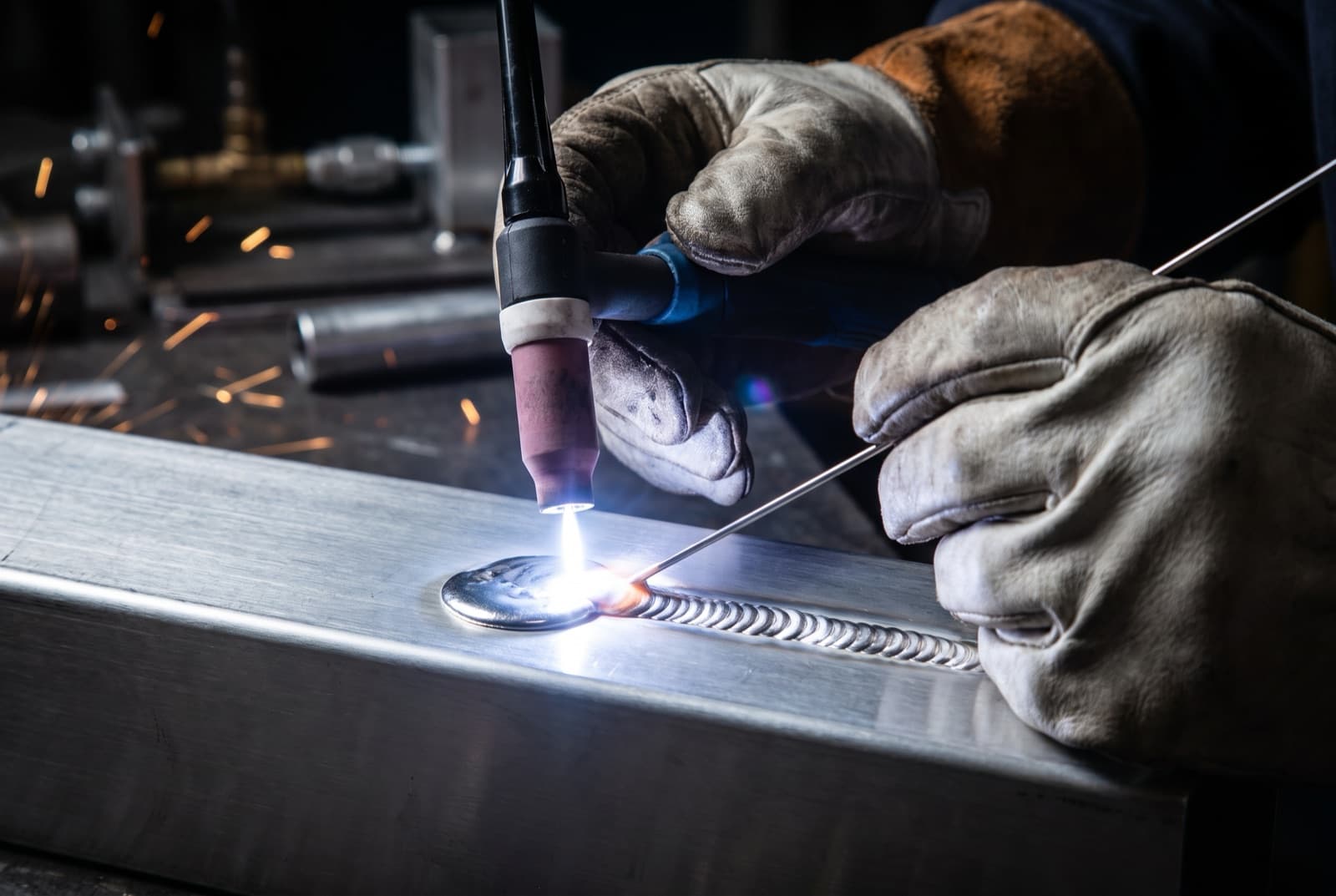
An aluminium TIG welder needs AC output. Aluminium grows a tough oxide skin that melts far hotter than the metal underneath, and only the alternating current cycle breaks that oxide up while the weld pool forms. A DC-only TIG machine will weld steel and stainless happily but cannot do clean aluminium.
Quick answer
- Aluminium TIG requires AC output; DC-only machines cannot break the oxide layer.
- Aluminium needs far more amps than steel of the same thickness.
- Use a pure or rare-earth tungsten and match filler rod to the alloy.
- Clean the oxide off with a dedicated stainless brush before you strike an arc.
Why aluminium TIG needs AC
Aluminium oxide melts at around 2,000 degrees Celsius while the aluminium beneath melts near 660. Weld with DC and you end up pushing a dirty, unstable pool under an unbroken skin. AC solves it by alternating: the electrode-positive half of the cycle blasts the oxide apart, and the electrode-negative half puts heat into the metal. Better machines let you set the balance between the two, so you can favour cleaning on dirty material and penetration on clean.
Choosing TIG tungsten types
The tungsten electrode is where a lot of beginners go wrong. Older advice says pure tungsten (green band) for AC aluminium, and it still works, forming a balled tip. Modern rare-earth options such as lanthanated (gold) or ceriated (grey) run well on both AC and DC, hold a sharper point and start more easily, which is why most shops now keep one type for everything. Avoid thoriated tungsten where you can, as grinding it produces low-level radioactive dust.
| Type | Band colour | Best for |
|---|---|---|
| Pure | Green | AC aluminium, traditional balled tip |
| Lanthanated | Gold | AC and DC, easy starts, general use |
| Ceriated | Grey | AC and DC, good at low amps |
| Thoriated | Red | DC steel, but grinding dust is radioactive |
TIG rods and filler for aluminium
Match the TIG rods to the parent alloy. The two everyday aluminium fillers are 4043, which flows well and suits most general and cast work, and 5356, which is stronger and takes anodising better, so it fits structural and marine jobs. Keep rods clean and dry, and never touch the filler end with bare, oily fingers. On steel and stainless the equivalent choice is a matching mild steel or 308L stainless rod.
MIG vs TIG for aluminium
The MIG vs TIG comparison shifts when aluminium is involved. TIG gives you full control, a neat stack-of-dimes bead and the ability to work thin material, which is why it wins on visible and precise work. Aluminium MIG, using a spool gun or push-pull torch to stop the soft wire birdnesting, is much faster and better suited to long runs and thicker sections. Most shops that do both keep TIG for finish work and MIG for volume.
Keep a stainless steel wire brush that touches nothing but aluminium. A brush previously used on steel drags carbon into the weld and leaves you chasing contamination you cannot see.