
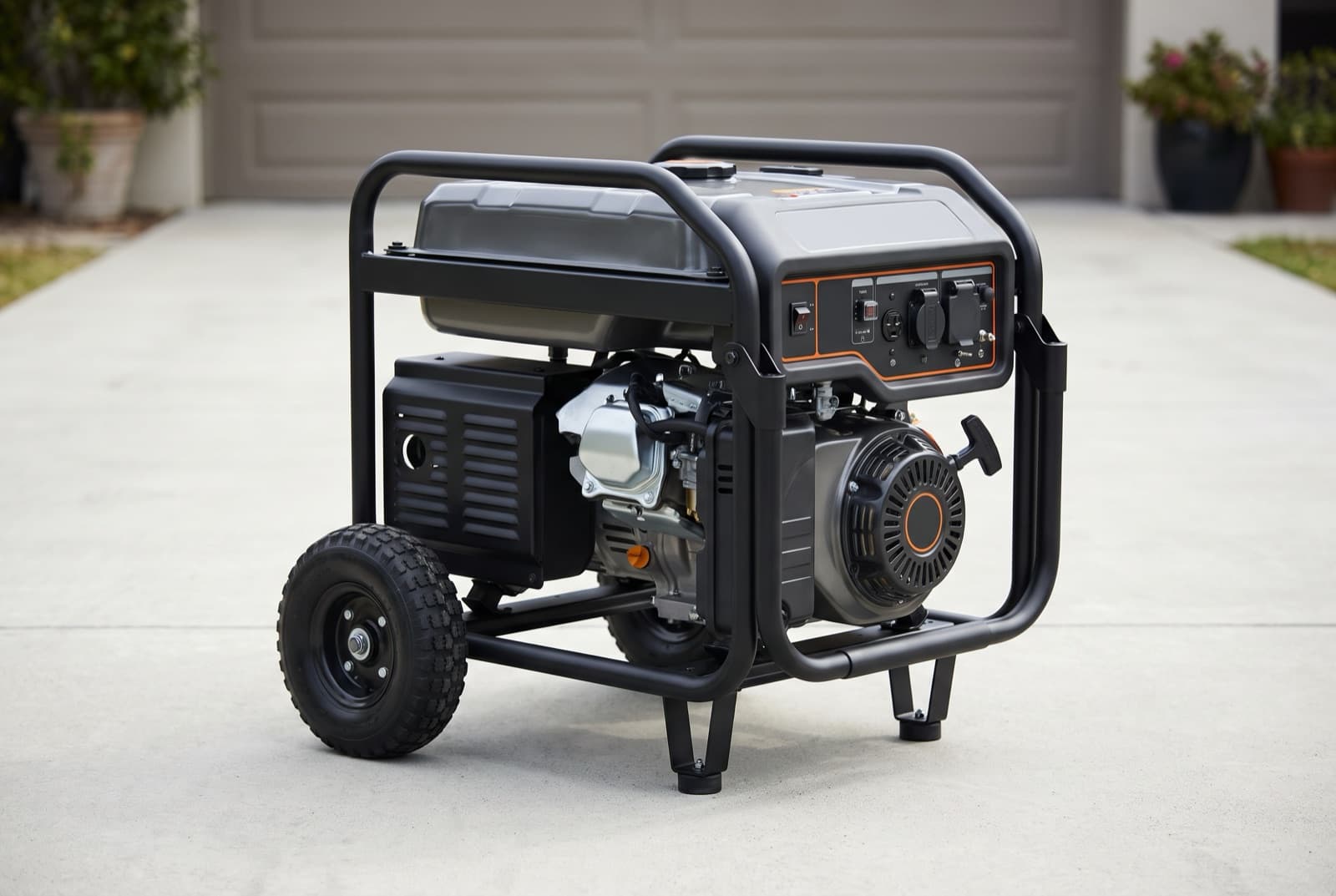
A 5kW generator delivers about 5,000 watts of continuous power. That is enough to run a small building site, a single-phase welder, a run of power tools, or the essential circuits of a home during an outage. The key to using one well is knowing the difference between the watts a device runs on and the higher surge it needs to start.
Quick answer
- A 5kW generator covers roughly 5,000 watts of continuous load.
- Motors and compressors draw two to three times their running watts to start.
- Add up running watts, then add the single largest starting surge on top.
- Inverter models give clean power for electronics; diesel models suit long, heavy runs.
What a 5kW generator runs
Five kilowatts goes a long way if you plan the load. It will comfortably run hand power tools, site lighting, a small single-phase welder, or a fridge, boiler pump, lights and sockets in a home backup role. What it will not do is run everything at once without thought. A big compressor or a table saw starting up can swallow most of the capacity for a second, so those surges have to fit inside the headroom.
Running watts vs starting watts
This is the heart of generator sizing and the answer to "what size generator do I need". Every device has a running wattage, the steady draw once it is going. Anything with a motor also has a starting or surge wattage, often two to three times higher, for the moment it kicks in. To size correctly, add up the running watts of everything on at once, then add the single biggest starting surge on top. That total must sit under the generator rating.
| Load | Running watts | Starting watts |
|---|---|---|
| Power tools (drill, grinder) | 600 to 1,500 | 1,000 to 2,500 |
| Small MIG or stick welder | 3,000 to 4,000 | 4,000 to 5,000 |
| Air compressor (small) | 1,500 to 2,000 | 3,000 to 4,500 |
| Home essentials (fridge, lights, boiler) | 2,000 to 3,000 | 3,000 to 4,000 |
Inverter, petrol or diesel
An inverter generator produces clean, stable power that will not upset sensitive electronics, chargers or a welder’s circuit board, and it runs quieter. A conventional petrol generator costs less and suits tools and lights where power quality matters less. A diesel generator is heavier and pricier up front but sips fuel on long runs, which is why it wins on sites that need power all day.
Never run a generator at its absolute limit for hours. Aim to keep the steady load under about 80 percent of the rating so it has headroom for surges and does not overheat.