
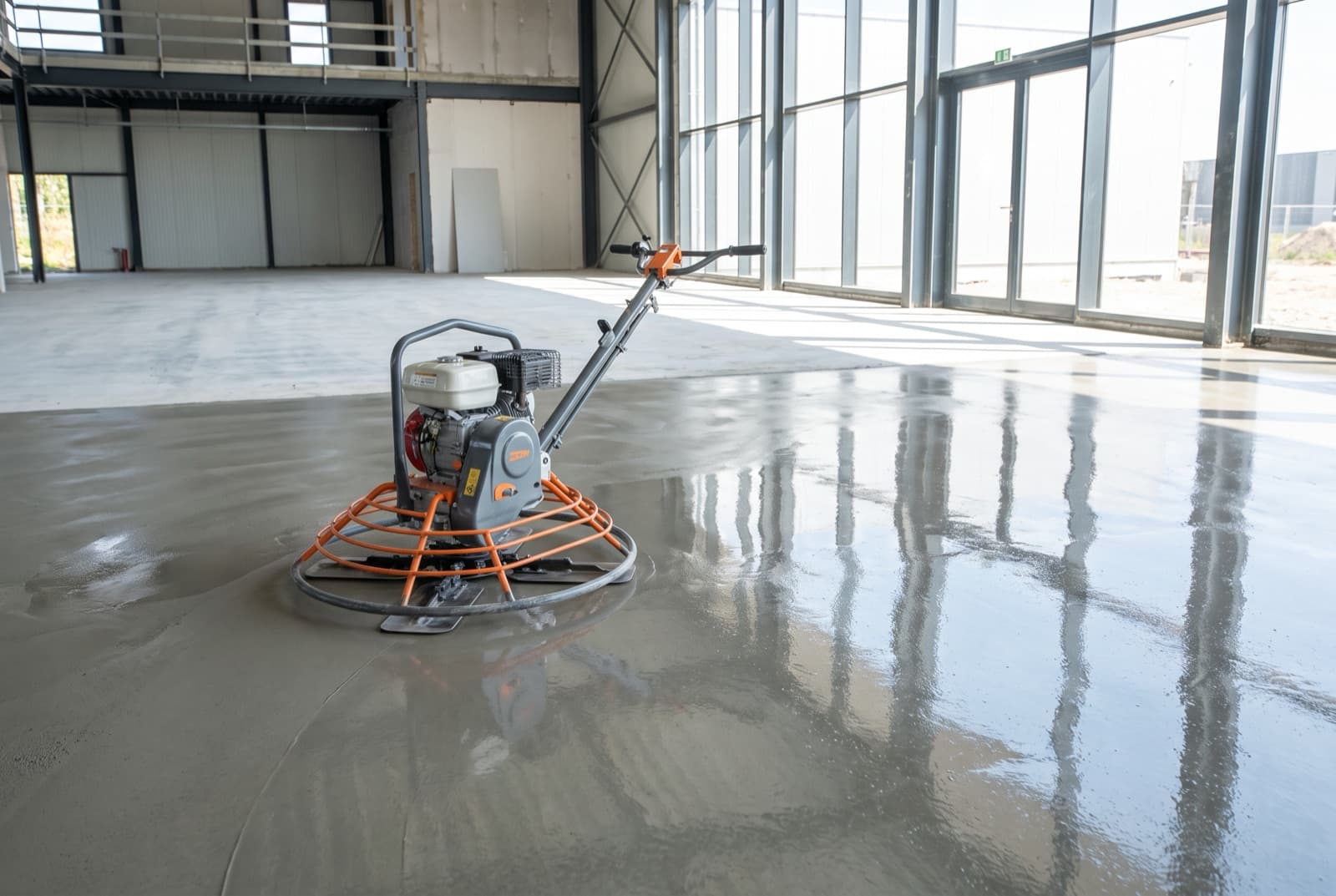
A power float is a petrol or electric machine that spins steel blades or a flat pan across fresh concrete to produce a smooth, dense, level surface. It is also called a power trowel. On a slab of any real size it replaces hours of hand troweling and leaves a harder, flatter finish that wears far better under traffic.
Quick answer
- A power float smooths and hardens the top layer of fresh concrete after it has been screeded and left to firm up.
- Use a pan first to flatten and bring up the cream, then blades to burnish the surface tight.
- Edging floats suit garages and small rooms; ride-on trowels are for warehouse and industrial slabs.
- Timing is everything: float too early and you tear the surface, too late and the blades skate.
What a power float does
Once concrete is poured, levelled and starting to set, the surface still needs work to become a proper floor. A power float compacts the top few millimetres, closes the pores and drives the fine cement paste flat. The result is a smooth, dust-resistant surface that takes coatings, resists abrasion and cleans easily. Done well, a floated slab needs no screed topping at all.
Power float and concrete screed: the order of work
Floating comes after screeding, not instead of it. A concrete screed levels the wet pour to the right height, usually pulled along a screed rail or beam. Once that floor screed has firmed enough to walk on with light footprints, the power float takes over to finish it. Skip the screed and the float has nothing flat to work with; skip the float and the screeded surface stays soft and porous.
| Stage | Tool | Purpose |
|---|---|---|
| Level | Screed rail or beam screed | Pull the wet concrete to the correct height and fall |
| Flatten | Power float with pan | Compact the surface and bring the cement cream up |
| Finish | Power float with blades | Burnish the top tight, smooth and hard |
| Cure | Curing membrane or sheeting | Hold moisture so the slab gains full strength |
Choosing a power float
Match the machine to the slab. A single edging float, roughly 600 mm to 900 mm across, handles garages, extensions and small commercial rooms and gets into corners. A ride-on twin-rotor trowel covers large industrial and warehouse pours far faster and with less operator fatigue. For most trade users the pan-and-blade edging float is the workhorse; the ride-on earns its keep only past a few hundred square metres.
Keep a spare set of finishing blades and a float pan on the van. Blades wear at the edges and a rounded blade drags lines into the surface instead of burnishing it flat.